
Discover how stress and weight gain are connected. Learn the role of cortisol, stress eating, and sleep, plus evidence-based strategies to manage your weight.

Overview: The Connection Between Stress and Weight
Chronic stress impacts more than just your mood—it plays a direct role in your physiological and metabolic health. When navigating high-pressure environments or prolonged worry, your body undergoes a cascade of hormonal and behavioral changes that can make weight management challenging.
Key Factors in the Stress-Weight Dynamic
Cortisol Release: Prolonged stress triggers the adrenal glands to release cortisol, a hormone that can promote fat storage, particularly visceral (abdominal) fat.
Appetite and Cravings: Elevated stress levels frequently alter hunger hormones and increase cravings for high-calorie, sugary, or comfort foods.
Sleep Disruption: Stress often interferes with sleep quality and duration, which subsequently disrupts appetite-regulating hormones like ghrelin and leptin.
Reduced Physical Activity: High stress can lead to fatigue or a lack of time, causing individuals to skip workouts and reduce their daily calorie expenditure.
Stress and Weight Gain: Is There a Connection?
Yes, chronic stress can contribute to weight gain, but it is only one of many factors that influence body weight.
Stress can affect appetite, food choices, sleep, physical activity, and other behaviors involved in weight management. The body’s stress response also involves hormones such as cortisol, which can influence hunger and energy regulation.
But there’s an important distinction: stress does not automatically make everyone gain weight.
Some people eat more when stressed, particularly highly palatable foods. Others lose their appetite or eat less. Research examining stress and body weight has also produced mixed results, with effects varying according to the type and duration of stress and individual characteristics.
The most useful way to think about the relationship is that chronic stress can create conditions that make healthy weight management more difficult.
How Does Stress Cause Weight Gain?
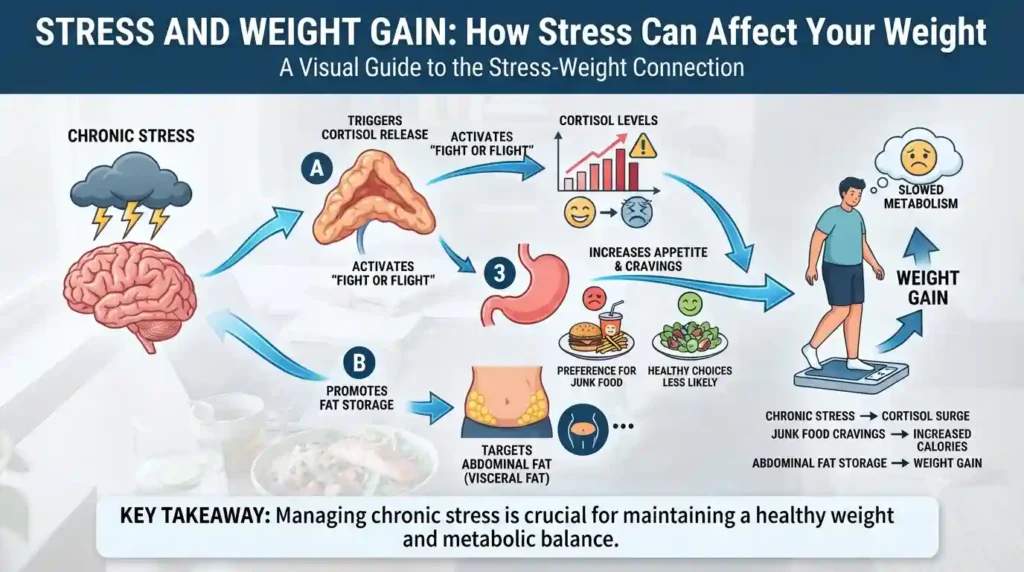
Stress may affect weight through several pathways rather than through one single mechanism.
Chronic stress can:
- Increase appetite in some people
- Encourage stress eating
- Increase cravings for energy-dense foods
- Disrupt sleep
- Reduce motivation for physical activity
- Make healthy meal planning more difficult
- Affect self-regulation and decision-making
- Change hormonal and metabolic processes
The CDC identifies long-term stress as one of several factors that can contribute to obesity and notes that stress-related hormones can influence energy balance and hunger.
Research also suggests that stress can interact with sleep, eating behavior, and physical activity, creating a cycle that may make weight management harder.
What Is the Connection Between Cortisol and Weight Gain?
Cortisol is one of the body’s main stress hormones.
When you encounter a stressful situation, your body activates its stress response. Cortisol helps the body respond to the challenge by influencing energy availability and other physiological processes.
Short-term increases in cortisol are normal and useful.
The problem is that chronic stress can keep stress-response systems activated for longer periods.
The CDC notes that long-term stress can trigger higher levels of hormones such as cortisol, which help regulate energy balance and hunger urges.
However, it’s misleading to say:
“High cortisol automatically causes belly fat.”
Human weight regulation is much more complicated than that.
Stress, calorie intake, food choices, sleep, activity, genetics, medications, medical conditions, and other factors can all interact.
Does Stress Make You Eat More?
It can.
Stress affects people differently, but some people respond to emotional or psychological stress by eating more.
Harvard Health explains that acute stress can temporarily suppress appetite through the body’s fight-or-flight response. With persistent stress, however, cortisol may increase appetite and motivation to eat.
This can become particularly important when stress increases the desire for highly palatable foods.
For example, after a difficult day, someone might find themselves reaching for:
- Ice cream
- Chips
- Cookies
- Fast food
- Candy
- Sugary drinks
- Other calorie-dense comfort foods
The food isn’t necessarily being chosen because of physical hunger.
It may be serving as a quick way to cope with an uncomfortable emotional state.
What Is Stress Eating?
Stress eating is eating in response to emotional or psychological stress rather than primarily in response to physical hunger.
It can happen occasionally without causing a significant problem.
The concern is when it becomes a frequent coping strategy.
A stressful cycle might look like this:
Stress → craving → eating → temporary relief → guilt or frustration → more stress
This doesn’t mean you lack willpower.
Stress can affect appetite, decision-making, sleep, and the ability to maintain normal routines.
Recognizing the pattern is often more useful than blaming yourself for it.
Why Do I Crave Junk Food When I’m Stressed?
Stress may increase the appeal of foods that are high in fat, sugar, or calories.
Research reviews have described connections between stress, appetite, cravings, and consumption of energy-dense foods.
There may be both biological and psychological reasons.
Highly palatable foods can provide an immediate pleasurable experience, which may temporarily distract from stress or unpleasant emotions.
That short-term relief can reinforce the behavior.
Over time, however, repeatedly using calorie-dense food as a stress-management strategy can make weight management more difficult.
Can Stress Cause Belly Fat?
Chronic stress may be associated with abdominal fat, but stress is not the only explanation for belly fat.
Some biological models suggest that prolonged stress and changes in cortisol regulation may influence where the body stores fat.
Research has investigated connections between psychosocial stress and measures such as waist circumference and abdominal adiposity. However, human findings are not completely consistent.
Therefore, avoid claims such as:
- “Cortisol is the only reason you have belly fat.”
- “Lower cortisol and your belly fat will disappear.”
- “Stress directly creates abdominal fat in everyone.”
Those statements oversimplify the evidence.
Can Stress Make It Harder to Lose Weight?
Yes, potentially.
If you’re trying to lose weight, chronic stress can interfere with several behaviors that support weight management.
For example, stress may make you:
- Sleep less
- Exercise less
- Eat more frequently
- Choose more calorie-dense foods
- Skip meal planning
- Eat impulsively
- Drink more alcohol
- Have less energy for healthy routines
A review in Obesity Reviews describes pathways linking mental stress with poor sleep, increased appetite, cravings, reduced motivation for physical activity, and potentially less effective weight-loss efforts.
This doesn’t mean stress makes weight loss impossible.
It means that reducing unnecessary stress and improving coping strategies can remove some barriers to healthy habits.
Does Stress Always Cause Weight Gain?
No.
This is one of the most important points to understand.
Stress can produce different responses in different people.
Some people:
- Eat more
- Crave high-calorie foods
- Sleep poorly
- Become less active
- Gain weight
Others may:
- Lose their appetite
- Skip meals
- Lose weight unintentionally
- Become more physically active
- Experience gastrointestinal symptoms
Research on the relationship between psychological stress and body weight is mixed. A systematic review published in 2024 found substantial inconsistency across studies and noted that many studies had a high risk of bias.
So stress and weight gain are associated, but stress should not be treated as a universal cause of weight gain.
How Much Weight Can Stress Cause You to Gain?
There is no reliable number that applies to everyone.
The amount of weight associated with stress depends on factors such as:
- Duration of stress
- Severity of stress
- Eating behavior
- Sleep
- Physical activity
- Starting body weight
- Genetics
- Medications
- Medical conditions
- Overall calorie intake
A meta-analysis of longitudinal studies found a statistically significant association between psychosocial stress and increasing adiposity, but the effect was very small overall and varied between studies.
That is why websites claiming that stress causes a specific number of pounds of weight gain should be treated cautiously.
Does Chronic Stress Slow Your Metabolism?
This claim is often exaggerated online.
Stress can influence metabolic processes, but it is inaccurate to tell readers that chronic stress simply “turns off your metabolism.”
Weight change is influenced by energy intake, energy expenditure, body composition, activity, hormones, sleep, medications, health conditions, and other factors.
The CDC describes obesity as a complex chronic disease influenced by multiple factors, including behaviors, stress, health conditions, medications, genes, and environment.
So if you’re gaining weight during a stressful period, don’t assume that a “damaged metabolism” is necessarily responsible.
How Does Stress Affect Sleep and Weight?
Stress and sleep can reinforce each other.
Chronic stress can make it difficult to fall asleep or stay asleep. The CDC lists problems sleeping among the effects of chronic stress.
Poor sleep can then make healthy eating and physical activity more difficult.
This can create a cycle:
Stress → poor sleep → fatigue → less activity or more cravings → weight-management difficulties → additional stress
This is one reason a weight-management strategy shouldn’t focus exclusively on food.
Sleep and stress management can be part of the same overall plan.
Can Stress Cause Weight Gain Even If You Don’t Eat More?
The answer isn’t simple.
Weight gain ultimately involves changes in energy balance and body tissues, but stress can affect several systems that influence this balance.
For example, stress may change:
- Appetite
- Food choices
- Activity
- Sleep
- Hormonal signaling
- Eating patterns
Research has proposed direct biological pathways as well as behavioral pathways linking stress and adiposity. However, the human evidence is not strong enough to claim that stress alone causes substantial weight gain independently of these factors.
10 Practical Ways to Manage Stress and Support a Healthy Weight
Stress management shouldn’t become another source of pressure.
Instead of trying to eliminate every stressful experience, focus on building manageable habits.
1. Identify Your Stress-Eating Triggers
Before changing your diet, identify when stress eating happens.
Ask yourself:
- When do I usually overeat?
- Am I physically hungry?
- What emotion am I experiencing?
- What happened immediately before I wanted food?
- What foods do I typically reach for?
A simple food-and-mood journal can reveal patterns.
2. Don’t Wait Until You’re Extremely Hungry
Long gaps between meals can make it harder to distinguish emotional cravings from genuine hunger.
A regular eating routine that includes nutritious foods can make weight management easier.
Aim for meals containing combinations of:
- Protein
- Fiber-rich carbohydrates
- Vegetables or fruit
- Healthy fats
3. Keep Convenient Healthy Foods Available
When you’re exhausted or stressed, convenience matters.
Keep easy options available, such as:
- Greek yogurt
- Fruit
- Nuts
- Eggs
- Beans
- Pre-cut vegetables
- Whole-grain foods
- Lean protein
- Simple frozen vegetables
The goal isn’t to eliminate comfort foods.
It’s to make nutritious choices easier when your decision-making energy is low.
4. Use Movement as Stress Relief
You don’t need an intense workout every time you’re stressed.
Try:
- A 10-minute walk
- Light stretching
- Cycling
- Strength training
- Dancing
- Recreational sports
The CDC recommends regular physical activity as part of a healthy approach to weight management and overall health.
5. Protect Your Sleep
If stress is keeping you awake, work on creating a consistent sleep routine.
Try:
- Going to bed and waking at consistent times
- Keeping your bedroom comfortable and dark
- Limiting stimulating activities before bed
- Addressing persistent sleep problems
Sleep is particularly important because stress and inadequate sleep can influence one another.
6. Take Short Breaks During the Day
Stress management doesn’t have to require an hour of meditation.
A short break can involve:
- Walking outside
- Deep breathing
- Stretching
- Quiet time
- Talking with someone
- Stepping away from work
The CDC recommends finding healthy coping techniques that work for you rather than relying on harmful coping behaviors.
7. Slow Down Before Eating
If you suddenly want a high-calorie food after a stressful event, pause for a moment.
Ask:
“Am I physically hungry, or am I trying to change how I feel?”
If you’re hungry, eat.
If you’re not hungry, consider whether another activity could provide the relief you’re looking for.
This isn’t about restricting food.
It’s about giving yourself another option.
8. Don’t Try to “Compensate” for Stress Eating
If you overeat, avoid responding with extreme restriction, fasting, or excessive exercise.
Instead:
- Acknowledge what happened.
- Identify the trigger.
- Return to your normal eating routine.
- Make the next meal balanced.
- Move forward without punishment.
One episode of overeating does not determine your long-term weight.
9. Reduce Alcohol if Stress Leads You to Drink
Some people use alcohol to cope with stress.
Alcohol can add calories and may also interfere with healthy routines and sleep.
If drinking has become a frequent response to stress, consider discussing it with a healthcare professional or qualified support service.
10. Get Professional Support When Stress Feels Unmanageable
You don’t have to manage chronic stress alone.
A qualified mental-health professional can help you develop healthier coping strategies, particularly if stress is contributing to:
- Emotional eating
- Anxiety
- Depression
- Sleep problems
- Binge eating
- Substance use
- Significant disruption to daily life
What Should You Eat When You’re Stressed?
There isn’t one special “anti-cortisol diet.”
A better approach is to maintain a generally nutritious eating pattern.
Build meals around:
Protein
Examples include:
- Eggs
- Fish
- Chicken
- Greek yogurt
- Beans
- Lentils
- Tofu
Fiber-Rich Foods
Examples include:
- Vegetables
- Fruits
- Beans
- Whole grains
- Nuts and seeds
Healthy Fats
Examples include:
- Avocado
- Nuts
- Seeds
- Olive oil
- Fatty fish
These foods can help create satisfying meals without relying heavily on highly processed, calorie-dense foods.
What About Cortisol Supplements?
Be cautious with products marketed as “cortisol blockers,” “cortisol detoxes,” or “stress fat burners.”
A supplement cannot be assumed to safely lower cortisol or produce weight loss simply because its marketing uses the word “cortisol.”
The CDC and NIDDK emphasize that weight is influenced by multiple factors rather than one hormone.
HealthFit should not recommend a supplement for stress-related weight gain without strong evidence for its specific ingredients, appropriate safety information, and a legitimate reason for its use.
When Should You Talk to a Doctor About Weight Gain?
Consider speaking with a healthcare professional if you experience:
- Rapid or unexplained weight gain
- Persistent fatigue
- Significant changes in appetite
- Severe sleep problems
- Symptoms of depression or anxiety
- Binge eating or loss of control around food
- Menstrual or reproductive changes
- Symptoms suggesting a hormonal disorder
- Weight gain after starting a medication
NIDDK notes that conditions such as hypothyroidism, PCOS, Cushing’s syndrome, and depression can contribute to weight gain, and certain medications can also affect body weight.
Don’t assume every unexplained change in weight is caused by stress.
Stress and Weight Gain: The Bottom Line
Chronic stress can contribute to weight gain, but it isn’t the only cause and doesn’t affect everyone the same way.
Stress may influence weight indirectly through stress eating, increased cravings, poor sleep, reduced physical activity, and disrupted routines. Hormonal changes involving cortisol may also play a role.
At the same time, scientific evidence is not strong enough to say that stress inevitably causes weight gain or that cortisol alone is responsible for belly fat.
The most practical approach is to address the whole picture:
Manage stress + eat nutritious foods + stay active + prioritize sleep + seek professional help when needed.
Healthy weight management should not require perfection.
Frequently Asked Questions
Can stress really cause weight gain?
Yes. Chronic stress can contribute to weight gain by affecting appetite, food choices, sleep, physical activity, and other behaviors. However, stress does not cause weight gain in everyone.
Does cortisol make you gain belly fat?
Cortisol is involved in stress and energy regulation, and researchers have studied its relationship with abdominal fat. However, it is inaccurate to say that cortisol alone causes belly fat. Body composition is influenced by many factors.
Why do I eat more when I’m stressed?
Stress can increase appetite and make highly palatable foods more appealing. Some people use food as a way to temporarily cope with difficult emotions.
Can stress cause weight gain without overeating?
Stress can affect several systems involved in weight regulation, but substantial weight gain ultimately involves changes in energy balance and body tissues. Stress may influence weight through appetite, food choices, activity, sleep, and other physiological processes.
How do I stop stress eating?
Start by identifying your triggers, maintaining regular nutritious meals, pausing before responding to cravings, and developing non-food coping strategies such as walking, relaxation, social support, or professional counseling.
Can reducing stress help me lose weight?
It may help indirectly by making healthy eating, sleep, physical activity, and other weight-management behaviors easier to maintain. Stress reduction should be considered part of an overall healthy lifestyle rather than a standalone weight-loss treatment.
Does stress slow metabolism?
Stress can affect metabolic processes, but the idea that stress simply “slows your metabolism” is an oversimplification. Weight is influenced by many interacting factors.
Why am I gaining weight even though I haven’t changed my diet?
Stress is one possibility, but unexplained weight gain can have many causes, including changes in activity, sleep, medications, fluid retention, hormonal conditions, and other health problems. Persistent unexplained changes should be discussed with a healthcare professional.
Does poor sleep from stress cause weight gain?
Poor sleep can make weight management more difficult, and chronic stress can interfere with sleep. The two factors can reinforce each other.
Is stress-related weight gain permanent?
Not necessarily. Weight can change as eating patterns, activity, sleep, stress, and other factors change. Avoid assuming that stress-related weight gain is permanent.
Can exercise reduce stress?
Regular physical activity can support overall health and is commonly recommended as part of healthy stress management and weight management.
Should I take a cortisol supplement for weight loss?
There is no reason to assume that a supplement marketed as a “cortisol blocker” will safely produce weight loss. Be cautious with products making strong hormone or fat-burning claims.
Friendly Summary
Stress and weight gain are connected, particularly when stress is chronic. Long-term stress can affect appetite, cravings, food choices, sleep, physical activity, and hormonal systems involved in energy regulation. The CDC recognizes long-term stress as one factor that can contribute to obesity.
However, stress does not automatically cause weight gain. Research findings are mixed, and the size of the relationship is generally modest. The most practical approach is to manage stress while maintaining nutritious eating habits, regular physical activity, adequate sleep, and appropriate medical or mental-health support when needed.
Disclaimer
This article provides general educational information about stress and weight management and is not individualized medical advice. Stress-related changes in weight can have many possible causes. If you experience unexplained or rapid weight gain, significant changes in appetite, persistent sleep problems, severe anxiety or depression, binge eating, or other concerning symptoms, speak with a qualified healthcare professional.
Also Read – Walking for Weight Loss: How Much Should You Walk?