
Learn how gut health and weight loss may be connected, including fiber-rich foods, probiotics, fermented foods, microbiome research, and practical tips.
Gut Health and Weight Loss
Your gut does much more than digest food. The digestive tract is home to a complex community of microorganisms known as the gut microbiome, and researchers are studying how these microbes interact with diet, metabolism, appetite, and body weight.
That doesn’t mean your gut bacteria determine whether you will lose weight. The science is more complicated than many “gut reset” advertisements suggest. Research shows associations between the gut microbiome and obesity, while studies of weight-loss interventions have found that changes in gut microbes can occur—but those changes are not always consistent or clearly responsible for weight loss.
The practical takeaway is simpler: eating a varied diet rich in fiber-containing plant foods and minimally processed foods can support gut health while also fitting into a healthy weight-management plan.
What Is the Gut Microbiome?
The gut microbiome is the community of microorganisms living in your digestive tract.
These microorganisms interact with the food you eat and produce substances that can affect different aspects of human biology. Researchers are particularly interested in compounds called short-chain fatty acids (SCFAs), which can be produced when certain gut microbes ferment dietary fiber.
Your microbiome is influenced by many factors, including:
- Diet
- Lifestyle
- Medications
- Age
- Environment
- Individual genetics
- Health conditions
There isn’t one ideal microbiome that every person needs to achieve.
Does Gut Health Affect Weight Loss?
Possibly, but the relationship is complex.
Researchers have found differences in gut microbiota between people with obesity and people with lower body weight. However, differences between individuals are substantial, and current evidence does not support the idea that one particular bacterial species is responsible for weight gain or that changing your microbiome automatically causes weight loss.
A systematic review of weight-loss interventions found that weight loss was associated with changes in gut microbiome diversity and intestinal permeability, but the researchers described the evidence as imprecise and noted substantial variation between studies.
Another systematic review of food-based weight-loss interventions found that changes in microbiome composition were inconsistent across studies.
What this means for you
It’s reasonable to support a healthy gut while working toward a healthy weight.
It’s not reasonable to assume that “fixing” your gut microbiome alone will cause substantial fat loss.
How Gut Health and Weight Loss May Be Connected
Researchers are investigating several possible pathways.
Appetite and Satiety
Gut microbes may interact with signals involved in appetite and energy regulation. NIDDK-supported research has found that diets designed to nourish the microbiome can influence microbial composition and function as well as certain hormones and measures related to energy balance.
However, these findings do not mean that a particular probiotic or food can reliably suppress appetite in everyone.
Fiber Fermentation
Some gut microorganisms ferment dietary fiber and produce short-chain fatty acids.
These compounds are being studied for their potential roles in metabolism and other physiological processes.
This is one reason fiber-rich foods are important when discussing both digestive health and healthy eating.
Energy Harvesting
Gut microbes can influence how components of food are broken down and processed.
Researchers have proposed that differences in the microbiome could affect how much energy is extracted from food. However, this area is still being investigated, and it would be misleading to tell readers that certain “fat-burning bacteria” control their weight.
Best Foods for Gut Health and Weight Loss
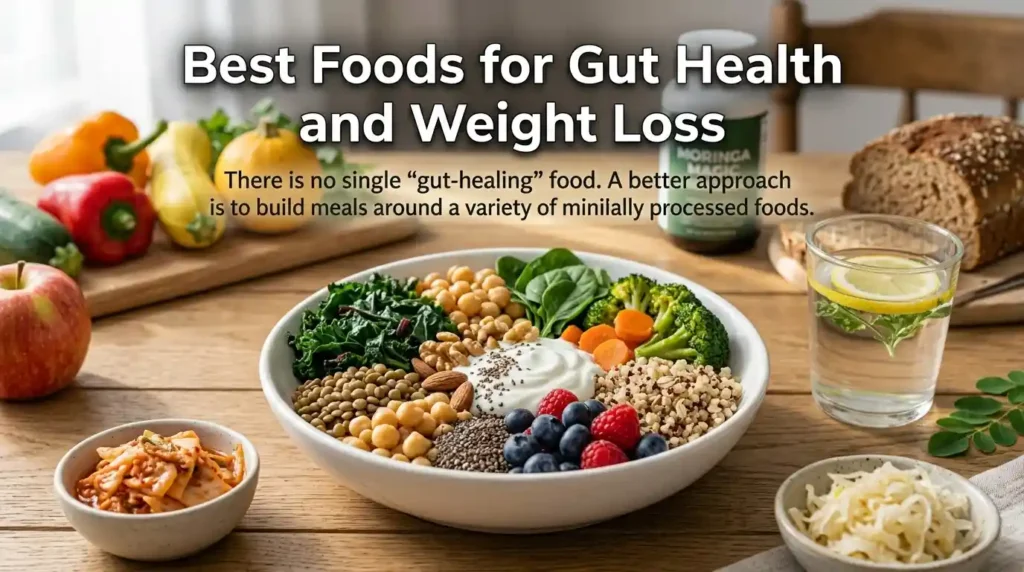
There is no single “gut-healing” food.
A better approach is to build meals around a variety of minimally processed foods.
1. Beans and Lentils
Beans, lentils, and other legumes provide:
- Fiber
- Plant protein
- Vitamins and minerals
They can also help make meals more filling.
Examples include:
- Black beans
- Chickpeas
- Kidney beans
- Lentils
- Split peas
2. Vegetables
Vegetables provide fiber and a wide variety of micronutrients.
Try rotating:
- Broccoli
- Brussels sprouts
- Carrots
- Spinach
- Peppers
- Cauliflower
- Green beans
- Squash
Eating a variety of plant foods also gives your gut microbes different types of dietary substrates to work with.
3. Fruits
Whole fruits provide fiber and naturally occurring nutrients.
Good options include:
- Apples
- Berries
- Oranges
- Pears
- Kiwi
- Bananas
Whole fruit is generally more filling than drinking fruit juice because it retains its fiber.
4. Whole Grains
Whole grains can contribute meaningful amounts of dietary fiber.
Examples include:
- Oats
- Barley
- Brown rice
- Whole-grain bread
- Whole-grain pasta
- Quinoa
Harvard Health notes that fiber from whole grains, fruits, vegetables, and legumes can support digestive health and may help with weight management.
5. Nuts and Seeds
Nuts and seeds can provide:
- Fiber
- Unsaturated fats
- Protein
- Micronutrients
Examples include:
- Almonds
- Walnuts
- Pistachios
- Chia seeds
- Flaxseed
- Pumpkin seeds
Because they are calorie-dense, portion size can still matter when weight loss is your goal.
6. Yogurt With Live Cultures
Some yogurts contain live microorganisms.
When shopping, look for products that identify live and active cultures on the label.
Plain or lower-added-sugar yogurt can be a practical choice when you’re trying to support a balanced diet.
Not every probiotic strain has the same effects, so you shouldn’t assume that every probiotic food or supplement produces the same health outcome.
7. Fermented Foods
Examples include:
- Yogurt
- Kefir
- Sauerkraut
- Kimchi
- Miso
- Naturally fermented vegetables
Fermented foods can contain live microorganisms, although the organisms and amounts vary by product and processing method.
How Much Fiber Should You Eat?
Fiber is one of the most practical connections between gut health and healthy weight management.
The current U.S. Dietary Guidelines for Americans, 2025–2030, emphasize whole, nutrient-dense foods, including vegetables, fruits, whole grains, and other minimally processed foods.
A commonly used dietary reference for adults is about 14 grams of fiber per 1,000 calories, although individual needs vary with age, sex, and calorie intake.
Instead of obsessing over a specific number, start by asking:
“How can I add more fiber-rich whole foods to my meals?”
For example:
Breakfast: oatmeal + berries
Lunch: lentil or bean bowl + vegetables
Snack: apple + nuts
Dinner: brown rice + vegetables + beans or another protein source
How Fiber May Help With Weight Loss
Fiber can support weight management in several ways.
Certain types of fiber can increase fullness and slow digestion. Fiber-rich foods can also make meals more filling without requiring large amounts of highly processed ingredients.
This can make it easier for some people to maintain an appropriate calorie intake.
But fiber is not a fat-burning ingredient.
Eating more fiber doesn’t guarantee weight loss if overall food intake and energy balance don’t support it.
Increase Fiber Slowly
If your current diet is low in fiber, suddenly eating very large amounts can cause:
- Gas
- Bloating
- Abdominal discomfort
- Changes in bowel habits
Increase fiber gradually and drink enough fluids.
Harvard Health specifically recommends easing into higher-fiber eating habits rather than making a dramatic overnight increase.
What About Probiotics and Weight Loss?
This is where marketing often gets ahead of the evidence.
Some systematic reviews of randomized trials have reported modest effects of certain probiotics or synbiotics on body weight in people with overweight or obesity. However, results vary by probiotic strain, dose, duration, and study design.
Another systematic review found that interventions affecting the microbiome did not always correlate with weight loss.
Therefore:
Probiotics should not be presented as a guaranteed weight-loss treatment.
A probiotic that produces an effect in one clinical trial cannot automatically be assumed to produce the same effect in every person.
Should You Take a Probiotic for Weight Loss?
Not necessarily.
If your main goal is weight management, improving your overall eating pattern is generally a more fundamental strategy than purchasing a probiotic supplement.
Probiotic supplements can contain different microorganisms and strains, and the evidence isn’t interchangeable between products.
The FDA does not approve dietary supplements for safety and effectiveness before they are marketed in the same way it approves medications.
If you’re considering a supplement because of a digestive problem or medical condition, discuss it with a healthcare professional.
Prebiotics vs. Probiotics
These terms are easy to confuse.
| Term | Simple explanation | Examples |
| Probiotics | Live microorganisms that may provide a health benefit when consumed in adequate amounts | Certain yogurts, fermented foods, supplements |
| Prebiotics | Substances, often certain types of dietary fiber, that can be used by beneficial microorganisms | Foods containing fermentable fibers |
| Fiber | A broad category of carbohydrates that aren’t fully digested in the small intestine | Beans, oats, vegetables, fruits, whole grains |
You don’t need to buy a specialized product to support these processes.
Many ordinary whole foods can contribute to a gut-supportive eating pattern.
What Foods May Be Less Helpful for Gut Health?
Rather than labeling individual foods as “bad,” consider your overall dietary pattern.
The current U.S. Dietary Guidelines emphasize reducing highly processed foods and prioritizing nutrient-dense whole foods.
A diet dominated by foods such as:
- Sugary drinks
- Highly refined snacks
- Highly processed desserts
- Processed meats
- Refined grains
may provide less fiber and nutritional variety than a diet built around whole and minimally processed foods.
This doesn’t mean you need to eliminate every processed food.
Overall dietary pattern matters more than one meal or one ingredient.
Can Improving Gut Health Make You Lose Belly Fat?
There is no proven gut-health method that specifically targets belly fat.
You cannot reliably choose where your body loses fat by changing your microbiome or eating a particular probiotic food.
If reducing body fat is your goal, focus on sustainable weight-management habits such as:
- Appropriate calorie intake
- A nutrient-dense eating pattern
- Regular physical activity
- Strength training
- Adequate sleep
- Consistent habits
Gut health can be part of that overall strategy rather than a separate “belly-fat solution.”
Gut Health and Weight Loss Meal Plan
Here’s an example of what a gut-supportive, weight-conscious day could look like.
Breakfast
Oatmeal bowl
- Oats
- Berries
- Chia or ground flaxseed
- Plain yogurt
Lunch
Lentil and vegetable bowl
- Lentils
- Mixed vegetables
- Whole grain
- Olive-oil-based dressing
Snack
Fruit and nuts
- Apple or pear
- Small serving of almonds or walnuts
Dinner
Balanced protein bowl
- Fish, chicken, tofu, or beans
- Roasted vegetables
- Brown rice or another whole grain
Optional fermented food
Include a serving of yogurt, kefir, kimchi, or another suitable fermented food if you enjoy it and tolerate it well.
This isn’t a prescribed diet. Portions should be adjusted to your energy needs and goals.
7 Simple Ways to Support Gut Health While Losing Weight
1. Eat More Variety
Rotate different fruits, vegetables, legumes, whole grains, nuts, and seeds.
2. Prioritize Fiber-Rich Foods
Add beans, oats, vegetables, fruits, and whole grains regularly.
3. Increase Fiber Gradually
Avoid suddenly doubling your fiber intake.
4. Choose Whole Foods More Often
Build most meals around minimally processed foods.
5. Include Fermented Foods if You Like Them
Yogurt, kefir, kimchi, and other fermented foods can be included as part of a varied diet.
6. Stay Physically Active
Exercise supports overall health and weight management. It shouldn’t be replaced by a “gut health” supplement.
7. Don’t Chase Microbiome Hacks
Be skeptical of products claiming to “reset,” “cleanse,” or “repair” your microbiome in a few days.
The science doesn’t support such simplistic promises.
Can Gut Health Affect Appetite?
Possibly.
The gut microbiome interacts with the digestive system and metabolic signaling, and researchers are studying how microbial metabolites and gut-derived hormones may influence appetite and energy balance. NIDDK research has demonstrated that dietary changes designed to nourish the microbiome can alter certain hormones and measures related to energy balance.
But appetite is influenced by many factors, including:
- Sleep
- Stress
- Diet
- Hormones
- Medications
- Activity
- Individual biology
Gut bacteria are only one part of a much larger system.
Does Weight Loss Improve Gut Health?
It may.
A systematic review and meta-analysis involving 47 trials found that intentional weight loss was associated with increased gut microbiome alpha diversity and reduced intestinal permeability, although the researchers emphasized that the evidence was imprecise and heterogeneous.
Other reviews have found inconsistent microbiome changes after diet-induced weight loss.
So the relationship may work in both directions:
Diet and lifestyle → changes in the gut environment
and
Weight change → changes in the gut microbiome
But researchers are still working out exactly how these relationships interact.
Common Gut Health and Weight-Loss Myths
Myth 1: A Gut Detox Will Burn Belly Fat
There is no established detox program that selectively removes belly fat.
Myth 2: You Need a Probiotic Supplement to Have a Healthy Gut
Not necessarily. A varied diet rich in fiber-containing foods can support a healthy eating pattern without requiring a supplement.
Myth 3: One Bacterial Strain Is the Secret to Weight Loss
Current research does not support such a simple explanation.
Myth 4: More Fiber Is Always Better
Very high fiber intake can cause digestive discomfort, especially if increased too quickly.
Myth 5: Fermented Foods Automatically Cause Weight Loss
Fermented foods can be part of a healthy diet, but eating them doesn’t guarantee fat loss.
Myth 6: Gut Health Is More Important Than Calories
Gut health matters, but it doesn’t eliminate the fundamental role of overall energy intake and expenditure in body-weight change.
When Should You Talk to a Healthcare Professional?
Digestive symptoms that persist or are severe shouldn’t automatically be blamed on an “unhealthy microbiome.”
Talk with a healthcare professional if you experience symptoms such as:
- Persistent abdominal pain
- Blood in the stool
- Unexplained weight loss
- Persistent diarrhea
- Persistent constipation
- Repeated vomiting
- Significant or ongoing changes in bowel habits
Don’t attempt to treat a potentially serious digestive condition with a probiotic, cleanse, or restrictive diet without appropriate medical guidance.
Also Read –High Protein Foods for Weight Loss: 15 Healthy Choices to Add to Your Diet
Frequently Asked Questions
Does gut health affect weight loss?
Gut health and body weight are biologically connected, but the relationship is complex. Research suggests the gut microbiome may influence metabolism and energy balance, while weight loss can also change the microbiome. The evidence does not show that simply changing your gut bacteria guarantees weight loss.
What are the best foods for gut health and weight loss?
Fiber-rich foods such as beans, lentils, vegetables, fruits, oats, whole grains, nuts, and seeds are practical choices. Fermented foods such as yogurt or kefir can also fit into a varied diet.
Can probiotics help with weight loss?
Some studies have found modest weight-related effects from certain probiotic strains or synbiotics, but results vary. Probiotics should not be considered a guaranteed weight-loss treatment.
Does fiber help you lose weight?
Fiber can help increase fullness and make meals more satisfying. Fiber-rich foods can therefore support a weight-management eating pattern, although fiber alone doesn’t guarantee weight loss.
How can I improve my gut health naturally?
Eat a varied diet containing vegetables, fruits, legumes, whole grains, nuts, seeds, and other minimally processed foods. Increase fiber gradually and include fermented foods if you tolerate them.
What is the best probiotic for weight loss?
There is no single probiotic that can be recommended as the best weight-loss probiotic for everyone. Research varies by strain and study population.
Can gut health reduce belly fat?
Improving gut health does not specifically target belly fat. Overall body-fat reduction depends on broader factors including diet, activity, and energy balance.
Should I take probiotics every day?
Not everyone needs a daily probiotic supplement. Supplements differ by strain and intended use, and the FDA does not preapprove dietary supplements for safety and effectiveness.
Are fermented foods good for gut health?
Some fermented foods contain live microorganisms and can be part of a varied diet. The specific microorganisms and potential effects vary between foods and products.
How quickly can gut health improve?
There is no universal timeline. The gut microbiome can respond to dietary changes, but meaningful health outcomes cannot be predicted from a short “gut reset” program.
Can poor gut health make it harder to lose weight?
The microbiome may play a role in metabolism and energy balance, but current evidence isn’t strong enough to conclude that poor gut health is a primary cause of difficulty losing weight in a particular individual.
Friendly Summary
Gut health and weight loss are connected, but the relationship is complex. The gut microbiome may influence digestion, metabolism, appetite-related signaling, and energy balance, while weight loss and dietary changes can also alter the gut microbiome. Current research does not support the claim that one probiotic, food, or “gut cleanse” can reliably cause weight loss.
For practical gut and weight-management support, focus on a varied eating pattern rich in vegetables, fruits, beans, lentils, whole grains, nuts, and seeds, while gradually increasing fiber if your current intake is low. Fermented foods such as yogurt and kefir can also be included if tolerated.
The most evidence-conscious approach is to treat gut health as one component of overall health and weight management—not a shortcut around nutrition, physical activity, and sustainable habits.