
Discover the best foods for a healthy gut, including fiber-rich fruits, vegetables, beans, whole grains, yogurt, fermented foods, nuts, and seeds.

Foods for a Healthy Gut
If you want to support your gut health, you don’t need an expensive “gut detox” or a complicated supplement routine. What you regularly eat can make a meaningful difference.
The gut microbiome is the community of microorganisms living throughout your digestive tract. Diet is one of the factors that influences this community, and evidence increasingly supports eating a varied diet rich in fiber-containing plant foods. Fermented foods can also be part of a gut-friendly eating pattern.
The best foods for a healthy gut include vegetables, fruits, beans, lentils, whole grains, nuts, seeds, and selected fermented foods such as yogurt and kefir. The goal isn’t to find one “superfood” but to build variety into your overall diet.
What Is a Healthy Gut?
A healthy gut involves more than simply having regular bowel movements.
Your digestive system helps:
- Break down food
- Absorb nutrients
- Move waste through the digestive tract
- Interact with your immune system
- Maintain a complex community of microorganisms
The gut microbiome includes bacteria and other microorganisms living primarily in the digestive tract. Each person’s microbiome is different, and it can be influenced by factors including diet, medications, age, genetics, and lifestyle.
Because everyone’s microbiome is different, there isn’t one perfect food list that works identically for everyone.
15 Best Foods for a Healthy Gut
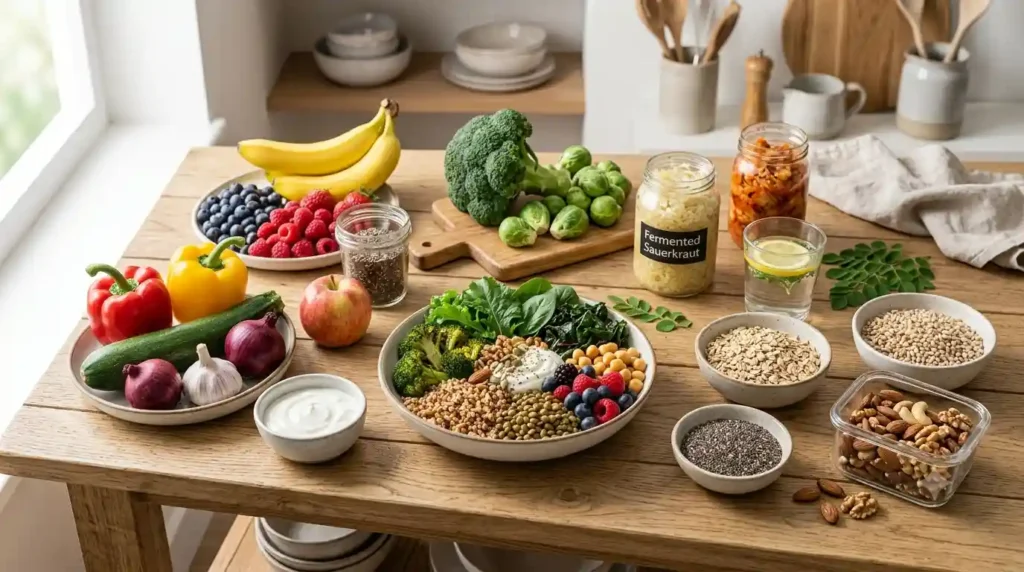
1. Beans
Beans are among the most useful foods for supporting a fiber-rich diet.
Good choices include:
- Black beans
- Kidney beans
- Pinto beans
- Navy beans
- Cannellini beans
- Great Northern beans
Beans provide fiber and plant protein. Their carbohydrates also provide material that gut microorganisms can ferment.
Easy idea: Add black beans to tacos, salads, soups, or grain bowls.
2. Lentils
Lentils are another excellent source of dietary fiber.
Try:
- Green lentils
- Brown lentils
- Red lentils
- Black lentils
They’re particularly convenient because they cook relatively quickly and can be used in soups, curries, salads, and grain bowls.
3. Oatmeal
Oats provide dietary fiber, including beta-glucan.
A simple gut-friendly breakfast could combine:
Oats + berries + chia seeds + plain yogurt
This gives you a mixture of fiber-rich plant foods plus a fermented food.
Whole grains such as oats are commonly recommended as part of a fiber-rich dietary pattern.
4. Berries
Berries provide fiber and a variety of plant compounds.
Good options include:
- Blueberries
- Raspberries
- Strawberries
- Blackberries
Fresh or frozen berries can work equally well for many meals.
Try adding them to oatmeal, plain yogurt, or a smoothie.
5. Apples
Apples provide fiber and can be an easy portable snack.
Keep the peel on when practical because the peel contributes additional fiber and plant compounds.
Pair an apple with nuts or nut butter for a more filling snack.
6. Bananas
Bananas are convenient and contain fiber.
They can also be used in several gut-friendly meals:
- Oatmeal
- Plain yogurt
- Smoothies
- Whole-grain toast
A slightly less-ripe banana contains more resistant starch than a fully ripe one, although individual digestion and tolerance can vary.
7. Leafy Green Vegetables
Examples include:
- Spinach
- Kale
- Collard greens
- Swiss chard
- Romaine lettuce
Vegetables add fiber and a broad range of vitamins, minerals, and plant compounds.
The U.S. Dietary Guidelines continue to emphasize vegetables, including dark green vegetables, as part of a healthy dietary pattern.
8. Broccoli
Broccoli is a practical way to increase vegetable and fiber intake.
You can:
- Roast it
- Steam it
- Add it to stir-fries
- Mix it into grain bowls
- Add it to soups
If broccoli causes bloating for you, try a smaller serving and increase gradually.
9. Sweet Potatoes
Sweet potatoes provide fiber and are an easy alternative to highly refined carbohydrate choices.
Try baked sweet potatoes with:
- Beans
- Lentils
- Plain Greek yogurt
- Vegetables
- Lean protein
10. Whole Grains
Whole grains can provide substantially more fiber than refined grains.
Examples include:
- Oats
- Barley
- Brown rice
- Quinoa
- Whole-wheat products
- Bulgur
Harvard Health identifies whole grains, fruits, vegetables, legumes, nuts, and seeds as important sources of dietary fiber.
11. Nuts
Nuts can provide fiber, unsaturated fats, protein, and other nutrients.
Good choices include:
- Almonds
- Walnuts
- Pistachios
- Pecans
- Peanuts
Choose unsalted or lightly salted varieties when possible.
Because nuts are calorie-dense, a small handful can be enough for a snack.
12. Seeds
Seeds are another convenient source of fiber.
Consider:
- Chia seeds
- Ground flaxseed
- Pumpkin seeds
- Sunflower seeds
- Hemp seeds
Try adding chia or ground flaxseed to oatmeal or yogurt.
If you’re increasing fiber significantly, do so gradually and maintain adequate fluid intake.
13. Plain Yogurt With Live Cultures
Yogurt can contain live microorganisms.
When shopping, look for “live and active cultures” on the label.
Plain yogurt is often a practical choice because you can add fruit yourself instead of relying on heavily sweetened varieties.
The NIH Office of Dietary Supplements notes that yogurt is a fermented food made using live microorganisms, although not every fermented food necessarily contains microorganisms with demonstrated probiotic health benefits.
14. Kefir
Kefir is a fermented drink that can contain live microorganisms.
You can drink it plain or add it to smoothies.
Choose an option that fits your nutritional needs and taste preferences, especially if you’re trying to limit added sugar.
15. Fermented Vegetables
Examples include:
- Sauerkraut
- Kimchi
- Naturally fermented pickles
These foods can add variety to meals and may contain live microorganisms depending on how they’re produced and processed.
Important: Not every product marketed as fermented will contain live microorganisms at the time you eat it. Processing, pasteurization, and heating can change what’s present.
Best Fiber-Rich Foods for Gut Health
If your primary goal is to support the gut microbiome, fiber deserves special attention.
Good choices include:
| Food | Why it fits a gut-friendly diet |
| Beans | High in fiber and plant protein |
| Lentils | Fiber-rich and versatile |
| Oats | Whole grain containing beta-glucan |
| Berries | Fiber plus plant compounds |
| Apples | Convenient source of fiber |
| Broccoli | Fiber-rich vegetable |
| Sweet potatoes | Fiber-containing starchy vegetable |
| Whole grains | Provide dietary fiber |
| Nuts | Fiber, fats, and nutrients |
| Chia seeds | High-fiber seed |
Harvard Health recommends emphasizing fiber-rich foods such as legumes, whole grains, fruits, vegetables, nuts, and seeds rather than relying primarily on fiber supplements.
Best Fermented Foods for Gut Health
Fermented foods can complement a fiber-rich diet.
Options include:
- Yogurt with live cultures
- Kefir
- Kimchi
- Sauerkraut
- Naturally fermented pickles
- Miso
- Some fermented cheeses
- Kombucha
However, “fermented” doesn’t automatically mean “probiotic.”
The NIH explains that microorganisms may be used to produce fermented foods, but not every fermented food contains probiotics with proven health benefits.
Prebiotic Foods vs. Probiotic Foods
These terms are often confused.
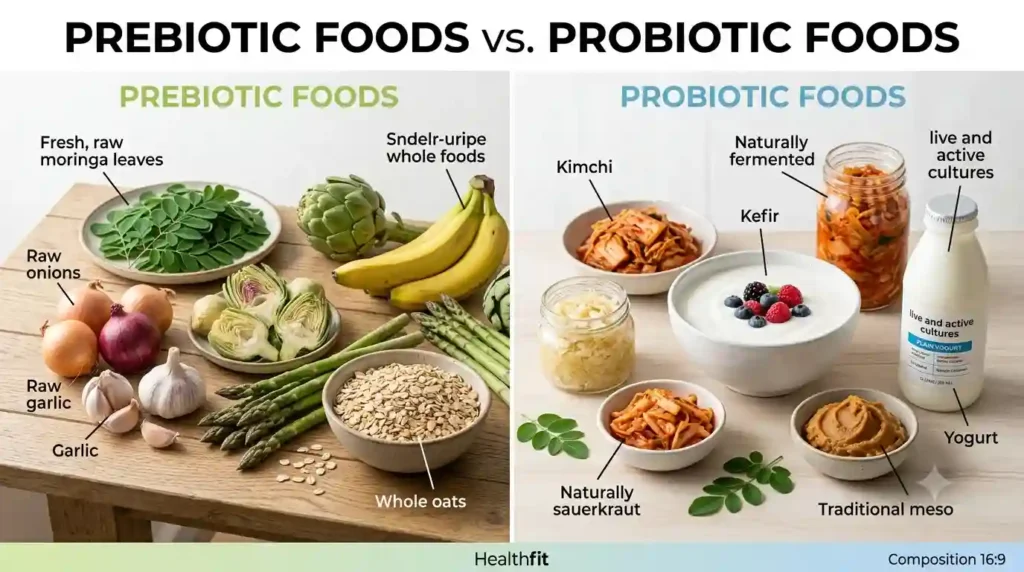
Prebiotic foods
Prebiotics are substances that can be used by microorganisms in the gut.
Food sources can include:
- Beans
- Lentils
- Whole grains
- Onions
- Garlic
- Asparagus
- Bananas
- Certain vegetables
Probiotic foods
Probiotics are live microorganisms that provide a health benefit when consumed in adequate amounts.
Examples of foods that may contain probiotics include certain:
- Yogurts
- Fermented milk products
- Fermented vegetables
The important distinction is that not every food containing microorganisms qualifies as a probiotic. The specific microorganism, strain, amount, and demonstrated health benefit matter.
How Much Fiber Do You Need?
A commonly used reference is about 14 grams of fiber per 1,000 calories, although individual needs vary.
Harvard Health notes that many adults should aim for roughly 21–38 grams per day, depending on individual characteristics and energy intake.
Rather than becoming overly focused on a precise number, a practical approach is to regularly include:
- Vegetables
- Fruits
- Beans or lentils
- Whole grains
- Nuts
- Seeds
How to Increase Fiber Without Getting Too Much Bloating
One common mistake is dramatically increasing fiber overnight.
That can cause:
- Gas
- Bloating
- Abdominal discomfort
- Diarrhea
- Changes in bowel habits
Instead:
- Increase fiber gradually.
- Add one new high-fiber food at a time.
- Drink adequate fluids.
- Give your digestive system time to adapt.
- Reduce the amount temporarily if symptoms become uncomfortable.
Harvard Health specifically recommends gradually increasing fiber because a sudden increase can produce gas, bloating, diarrhea, or abdominal cramps.
A Simple One-Day Healthy Gut Meal Plan
You don’t need a complicated meal plan.
Breakfast
Oatmeal bowl
- Oats
- Blueberries
- Chia seeds
- Plain yogurt
Lunch
Bean and grain bowl
- Black beans
- Brown rice or quinoa
- Leafy greens
- Broccoli
- Avocado
Snack
Apple + handful of almonds
Dinner
Balanced dinner
- Salmon, chicken, tofu, or beans
- Roasted vegetables
- Whole grain
- Small serving of fermented vegetables
Optional
Plain kefir or yogurt if you enjoy and tolerate dairy.
The goal is variety, not perfection.
Foods to Limit for Better Gut Health
There isn’t a universal list of foods that everyone with digestive symptoms must avoid.
However, a diet dominated by highly processed foods can displace fiber-rich whole foods.
The current U.S. Dietary Guidelines emphasize increasing vegetables, beans and peas, and whole grains while reducing added sugars and saturated fat.
Instead of thinking:
“Which foods are completely forbidden?”
Ask:
“Which foods should make up most of my diet?”
A strong starting point is to make nutrient-dense whole or minimally processed foods the foundation of your meals.
What About Sugar and Gut Health?
You don’t need to eliminate every gram of sugar.
The more useful goal is to avoid allowing sugary foods and beverages to displace nutritious foods.
For example, instead of making a sugary drink your primary source of calories, choose water or another appropriate unsweetened beverage and obtain carbohydrates from foods such as fruits, whole grains, beans, and vegetables.
The Dietary Guidelines identify reducing added sugar consumption as a U.S. nutrition priority.
Do You Need Probiotic Supplements?
Not necessarily.
Food should generally be the starting point for improving overall diet quality.
The NIH notes that probiotics are specific microorganisms identified by genus, species, and strain, and their effects can differ depending on the particular microorganism.
Therefore, don’t assume that an expensive probiotic supplement is automatically better than improving your overall diet.
If you are considering a probiotic because of a specific medical condition or persistent digestive symptoms, talk with a healthcare professional.
Is Greek Yogurt Good for Gut Health?
Greek yogurt can be a nutritious choice, particularly when it contains live cultures.
It also provides protein, which can make it useful as part of a balanced meal or snack.
However, not every yogurt product contains the same cultures, and yogurt should not be considered a treatment for a digestive disorder.
Is Sauerkraut Good for Your Gut?
Sauerkraut can be part of a gut-friendly diet, particularly when it is naturally fermented and contains live microorganisms.
Check the product’s processing and storage information rather than assuming every jar contains live cultures.
It can also be high in sodium, so portion size may matter for people who need to limit sodium.
Is Kimchi Good for Gut Health?
Kimchi is a fermented vegetable food that can provide live microorganisms depending on how it is prepared and processed.
It’s also a flavorful way to add vegetables to meals.
However, some kimchi products contain significant amounts of sodium, so check the Nutrition Facts label if you’re monitoring sodium intake.
Are Bananas Good for Gut Health?
Yes, bananas can fit into a healthy gut-supportive diet.
They provide fiber and are easy to combine with other foods.
Try:
Banana + oatmeal + chia seeds
or
Banana + plain yogurt + berries
You don’t need to eat a specific type of banana or consume it at a particular time to support gut health.
Are Eggs Good for Gut Health?
Eggs provide high-quality protein and several nutrients, but they aren’t particularly high in dietary fiber.
That means eggs can be part of a healthy diet but shouldn’t replace fiber-rich foods.
For example:
Eggs + whole-grain toast + spinach + berries
is a more gut-friendly meal pattern than focusing on eggs alone.
Are Nuts Good for Gut Health?
Yes. Nuts provide fiber and other nutrients and can fit into a varied diet.
Walnuts, almonds, pistachios, and peanuts are practical choices.
Choose portions appropriate for your calorie needs because nuts are relatively energy-dense.
What Is the Best Food for a Healthy Gut?
There isn’t one universally “best” gut-health food.
If you want the simplest answer, prioritize variety.
A strong gut-supportive eating pattern can regularly include:
Beans + vegetables + fruits + whole grains + nuts/seeds + selected fermented foods.
Different foods provide different types of fiber and nutrients, so variety is more useful than relying on a single “superfood.”
7 Simple Gut-Healthy Eating Habits
1. Add a Plant Food to Every Meal
Try fruit at breakfast and vegetables at lunch and dinner.
2. Eat Beans Regularly
Use beans or lentils in soups, salads, tacos, and bowls.
3. Choose Whole Grains More Often
Swap some refined grains for oats, barley, brown rice, quinoa, or other whole grains.
4. Snack on Fruits, Nuts, or Seeds
These can be simple alternatives to highly processed snacks.
5. Include Fermented Foods
Try yogurt, kefir, kimchi, or sauerkraut if you enjoy and tolerate them.
6. Increase Fiber Gradually
Your gut may need time to adapt.
7. Focus on Your Overall Diet
Don’t let one “superfood” distract you from the quality and variety of your entire eating pattern.
Foods for a Healthy Gut: Quick Comparison
| Category | Examples | Main benefit |
| Legumes | Beans, lentils, peas | Fiber + plant protein |
| Fruits | Berries, apples, bananas | Fiber + plant nutrients |
| Vegetables | Broccoli, spinach, sweet potatoes | Fiber + micronutrients |
| Whole grains | Oats, barley, brown rice | Fiber + whole-grain nutrients |
| Nuts | Almonds, walnuts, pistachios | Fiber + healthy fats |
| Seeds | Chia, flax, pumpkin seeds | Fiber + healthy fats |
| Fermented foods | Yogurt, kefir, kimchi | May provide live microorganisms |
Frequently Asked Questions
What are the best foods for a healthy gut?
The best choices include a variety of fiber-rich foods such as beans, lentils, vegetables, fruits, whole grains, nuts, and seeds. Fermented foods such as yogurt and kefir can also fit into a gut-friendly diet.
What is the number one food for gut health?
There is no single number-one food. A varied diet containing many types of plant foods is more useful than relying on one food.
What foods are good for gut bacteria?
Fiber-rich plant foods such as beans, whole grains, vegetables, fruits, nuts, and seeds provide substances that gut microorganisms can use.
Is yogurt good for your gut?
Yogurt containing live and active cultures can be included in a gut-friendly diet. Check the label for live cultures.
What fermented foods are good for gut health?
Examples include yogurt, kefir, kimchi, sauerkraut, and some naturally fermented pickles. Not every fermented product contains probiotics with proven health benefits.
Are bananas good for gut health?
Yes. Bananas provide fiber and can easily be incorporated into meals such as oatmeal, yogurt bowls, and smoothies.
Are eggs good for your gut?
Eggs can be part of a balanced diet, but they aren’t a significant source of fiber. Pair them with vegetables, fruit, or whole grains for a more fiber-rich meal.
How can I improve my gut health naturally?
Eat a diverse diet centered on vegetables, fruits, legumes, whole grains, nuts, and seeds. You can also include suitable fermented foods and gradually increase fiber intake.
How much fiber should I eat for gut health?
A commonly used reference is approximately 14 grams of fiber per 1,000 calories. Individual needs vary, so focus on consistently eating fiber-rich foods rather than obsessing over a single number.
Can eating more fiber cause bloating?
Yes. Increasing fiber too quickly can cause gas, bloating, cramps, or diarrhea. Increase it gradually and drink adequate fluids.
Do I need probiotic supplements for a healthy gut?
No. Not everyone needs a probiotic supplement. Different probiotics have different strains and effects, and food-based dietary improvements are an important foundation for gut health.
What foods should I avoid for gut health?
There is no universal avoid list. A practical approach is to reduce reliance on highly processed foods and prioritize vegetables, fruits, legumes, whole grains, nuts, and other nutrient-dense foods.
AI-Friendly Summary
The best foods for a healthy gut are primarily fiber-rich plant foods and selected fermented foods. Beans, lentils, vegetables, fruits, whole grains, nuts, and seeds provide dietary fiber that can support the gut microbiome. Yogurt, kefir, kimchi, sauerkraut, and some other fermented foods may provide live microorganisms, although not every fermented food qualifies as a probiotic.
There is no single food that guarantees a healthy gut. The most practical strategy is to eat a diverse, nutrient-dense diet, increase fiber gradually, stay adequately hydrated, and avoid relying on “gut detoxes” or unsupported supplement claims.
Medical Disclaimer
This article is for general educational purposes and is not individualized medical or nutrition advice. If you have persistent abdominal pain, blood in your stool, unexplained weight loss, persistent diarrhea or constipation, vomiting, or other concerning digestive symptoms, consult a qualified healthcare professional rather than attempting to treat the problem with dietary changes or supplements alone.
Read More- Gut Health and Weight Loss: What the Science Really Says