
Explore a healthy meal plan for weight loss with a practical 7-day menu, grocery list, meal ideas, portion tips, and sustainable healthy-eating strategies.
Healthy Meal Plan for Weight Loss
A healthy meal plan for weight loss does not need to mean tiny portions, skipping meals, or eliminating carbohydrates. A better approach is to build meals around vegetables and fruit, protein-rich foods, whole grains or other nutrient-dense carbohydrates, and appropriate portions of healthy fats while keeping overall calorie intake appropriate for your needs.
The CDC recommends healthy eating patterns that emphasize nutrient-dense foods, including vegetables, fruits, protein foods, dairy without added sugars, healthy fats, and whole grains. It also notes that healthy weight management involves more than food alone—it includes physical activity, sleep, and stress management.
Below is a flexible 7-day meal plan for weight loss that you can adapt to your preferences, budget, schedule, and nutritional needs.
Important: This is a general educational meal plan, not an individualized calorie prescription. Your calorie and nutrient needs depend on factors such as age, sex, height, weight, activity level, health conditions, medications, and other factors.
What Makes a Meal Plan Healthy for Weight Loss?
A useful weight-loss meal plan should be:
- Nutritionally balanced
- Satisfying rather than extremely restrictive
- Reasonable in calories for the individual
- Rich in vegetables and fruits
- Adequate in protein
- Based largely on minimally processed foods
- Flexible enough to follow long term
- Practical for your budget and lifestyle
The National Institute of Diabetes and Digestive and Kidney Diseases (NIDDK) recommends looking for weight-loss programs that include a healthy reduced-calorie eating plan, physical activity, behavioral support, and a strategy for maintaining weight loss. It also warns against programs promising extreme or rapid results.
There is no single meal plan that is ideal for everyone. Mayo Clinic similarly recommends choosing a varied, balanced plan that includes foods you enjoy and can realistically follow over the long term.
7-Day Healthy Meal Plan for Weight Loss
This sample plan focuses on balanced meals rather than an extremely restrictive diet.
Day 1
Breakfast
- Plain Greek yogurt
- Berries
- Oatmeal
- Small portion of walnuts
Lunch
- Grilled chicken salad
- Mixed greens
- Tomatoes
- Cucumbers
- Carrots
- Small portion of avocado
- Light vinaigrette
Snack
- Apple
- Small portion of peanut butter
Dinner
- Baked salmon
- Roasted broccoli
- Baked sweet potato
- Side salad
Day 2
Breakfast
- Two eggs scrambled with spinach and peppers
- Whole-grain toast
- Orange
Lunch
- Turkey and vegetable whole-grain wrap
- Lettuce and tomato
- Side of fruit
Snack
- Plain Greek yogurt
- Strawberries
Dinner
- Chicken and vegetable stir-fry
- Brown rice
- Broccoli, peppers, mushrooms, and carrots
Day 3
Breakfast
- Oatmeal
- Banana slices
- Chia seeds
- Plain Greek yogurt
Lunch
- Lentil and vegetable soup
- Mixed-green salad
- Whole-grain bread
Snack
- Carrots and cucumber
- Hummus
Dinner
- Grilled shrimp
- Quinoa
- Roasted vegetables
- Green salad
Day 4
Breakfast
- Vegetable omelet
- Whole-grain toast
- Berries
Lunch
- Tuna salad made with a moderate amount of mayonnaise or Greek yogurt
- Whole-grain crackers
- Mixed vegetables
- Apple
Snack
- Cottage cheese
- Fresh fruit
Dinner
- Lean turkey chili with beans
- Mixed green salad
- Small portion of brown rice or whole-grain bread
Day 5
Breakfast
- Plain Greek yogurt
- Berries
- Oats
- Small portion of nuts
Lunch
- Grilled chicken grain bowl
- Brown rice or quinoa
- Spinach
- Tomatoes
- Cucumber
- Beans
- Salsa
Snack
- Hard-boiled egg
- Piece of fruit
Dinner
- Baked cod
- Roasted potatoes
- Green beans
- Side salad
Day 6
Breakfast
- Scrambled eggs
- Avocado
- Whole-grain toast
- Fresh fruit
Lunch
- Chickpea and vegetable salad
- Mixed greens
- Tomatoes
- Cucumber
- Olive-oil-based dressing
Snack
- Plain yogurt
- Berries
Dinner
- Grilled chicken breast
- Roasted vegetables
- Quinoa or brown rice
Day 7
Breakfast
- Oatmeal
- Blueberries
- Chia seeds
- Plain Greek yogurt
Lunch
- Turkey and vegetable sandwich on whole-grain bread
- Side salad
- Fruit
Snack
- Apple
- Small portion of nuts
Dinner
- Lean beef or tofu stir-fry
- Mixed vegetables
- Brown rice
How to Portion Your Meals for Weight Loss
You don’t necessarily need to weigh every ingredient or count every calorie.
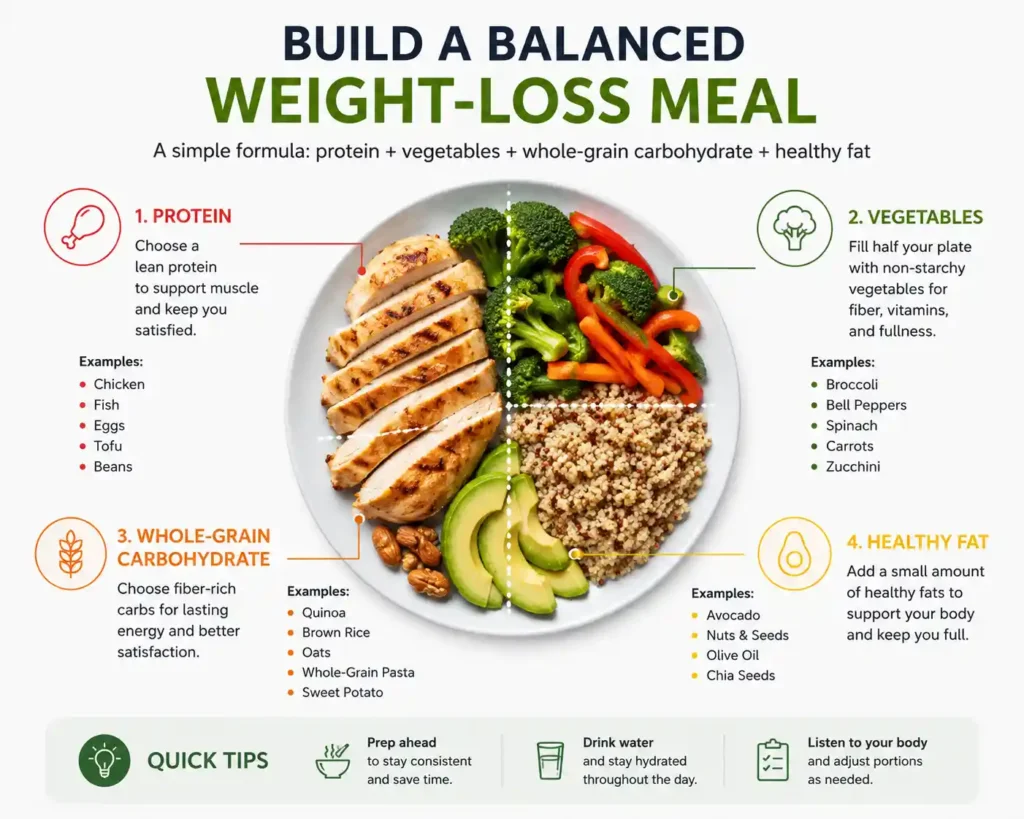
A simple plate-based approach can make meal planning easier.
Start with vegetables
Make vegetables a substantial part of lunch and dinner.
Good options include:
- Broccoli
- Spinach
- Peppers
- Carrots
- Green beans
- Cauliflower
- Tomatoes
- Mushrooms
- Zucchini
Vegetables and fruits contain water and fiber and can add volume to meals. The CDC notes that substituting lower-calorie fruits and vegetables for some higher-calorie ingredients can help reduce overall calorie intake without necessarily reducing the amount of food on your plate.
Add protein
Choose foods such as:
- Chicken
- Turkey
- Fish
- Shrimp
- Eggs
- Greek yogurt
- Cottage cheese
- Beans
- Lentils
- Tofu
- Tempeh
Protein can help make meals more satisfying and provides nutrients needed to maintain muscle and other tissues.
Include a quality carbohydrate
Examples include:
- Oatmeal
- Brown rice
- Quinoa
- Potatoes
- Sweet potatoes
- Whole-grain bread
- Whole-grain pasta
- Beans
- Fruit
There is no general requirement to eliminate carbohydrates to lose weight. CDC guidance emphasizes variety rather than eliminating an entire food group.
Add a moderate amount of healthy fat
Consider:
- Avocado
- Olive oil
- Nuts
- Seeds
- Nut butters
Healthy fats are nutritious but calorie-dense, so portion size still matters.
Healthy Breakfast Ideas for Weight Loss
A good breakfast can be simple.
Greek Yogurt Bowl
Combine:
- Plain Greek yogurt
- Berries
- Oats
- Chia seeds
Vegetable Egg Breakfast
Combine:
- Eggs
- Spinach
- Peppers
- Whole-grain toast
- Fruit
High-Protein Oatmeal
Combine:
- Oatmeal
- Milk or fortified soy milk
- Berries
- Greek yogurt
- Chia seeds
The goal isn’t to make breakfast as low-calorie as possible. It’s to create a satisfying meal that fits your overall eating pattern.
Healthy Lunch Ideas for Weight Loss
Chicken Salad Bowl
Use:
- Grilled chicken
- Mixed greens
- Tomatoes
- Cucumbers
- Carrots
- Beans
- Small amount of avocado
Turkey Whole-Grain Wrap
Use:
- Lean turkey
- Whole-grain tortilla
- Lettuce
- Tomato
- Cucumber
- Mustard
- Fruit on the side
Lentil Soup and Salad
Combine:
- Lentil soup
- Large mixed salad
- Whole-grain bread
Beans and lentils are particularly useful because they provide both protein and fiber.
Healthy Dinner Ideas for Weight Loss
Dinner doesn’t have to be complicated.
Salmon + Vegetables + Sweet Potato
A simple combination of protein, vegetables, and a nutrient-dense carbohydrate.
Chicken Stir-Fry
Use chicken with several vegetables and a moderate portion of brown rice.
Turkey Bean Chili
Combine lean ground turkey, beans, tomatoes, peppers, onions, and spices.
Tofu Vegetable Bowl
Combine tofu, mixed vegetables, brown rice, and a modest amount of sauce.
Baked Fish Dinner
Serve fish with roasted vegetables and potatoes.
Healthy Snacks for Weight Loss
You don’t have to snack if you’re not hungry.
But if you need something between meals, useful choices include:
- Apple with a small amount of peanut butter
- Greek yogurt and berries
- Cottage cheese and fruit
- Carrots with hummus
- Hard-boiled egg and fruit
- Edamame
- Small portion of nuts
- Fresh vegetables with a yogurt-based dip
The CDC recommends keeping nutritious snacks available and paying attention to portion sizes rather than eating directly from a package.
What Should You Drink?
Drinks can contribute a surprising amount of calories.
Good everyday choices include:
- Water
- Sparkling water without added sugar
- Unsweetened tea
- Unsweetened coffee
- Low-fat or fat-free milk when appropriate
- Fortified unsweetened soy beverages
Try to limit frequent consumption of:
- Regular soda
- Sweetened coffee drinks
- Energy drinks with added sugar
- Sweet tea
- Fruit-flavored sugary drinks
- Large specialty beverages
Whole fruit is generally preferable to fruit juice because it provides fiber and tends to be more filling.
Grocery List for a Healthy Weight-Loss Meal Plan
Protein
- Chicken breast
- Turkey
- Salmon
- Cod or other fish
- Shrimp
- Eggs
- Plain Greek yogurt
- Cottage cheese
- Tuna
- Lentils
- Black beans
- Chickpeas
- Tofu
Vegetables
- Spinach
- Broccoli
- Carrots
- Bell peppers
- Cucumbers
- Tomatoes
- Green beans
- Mushrooms
- Zucchini
- Salad greens
Fruits
- Apples
- Bananas
- Berries
- Oranges
- Grapes
- Kiwi
Fresh, frozen, and canned fruits can all be useful. When choosing canned fruit, look for options without added sugar or heavy syrup.
Whole grains and carbohydrates
- Oatmeal
- Brown rice
- Quinoa
- Whole-grain bread
- Whole-grain tortillas
- Potatoes
- Sweet potatoes
Healthy fats
- Avocados
- Olive oil
- Chia seeds
- Flaxseed
- Walnuts
- Almonds
- Natural peanut butter
How to Make a Weight-Loss Meal Plan Easier to Follow
The best meal plan is one you can actually maintain.
Plan meals before you’re hungry
Decide what you’re eating ahead of time.
This can reduce the need to make last-minute food decisions.
The CDC specifically recommends planning meals and keeping healthier foods available as part of healthy weight management.
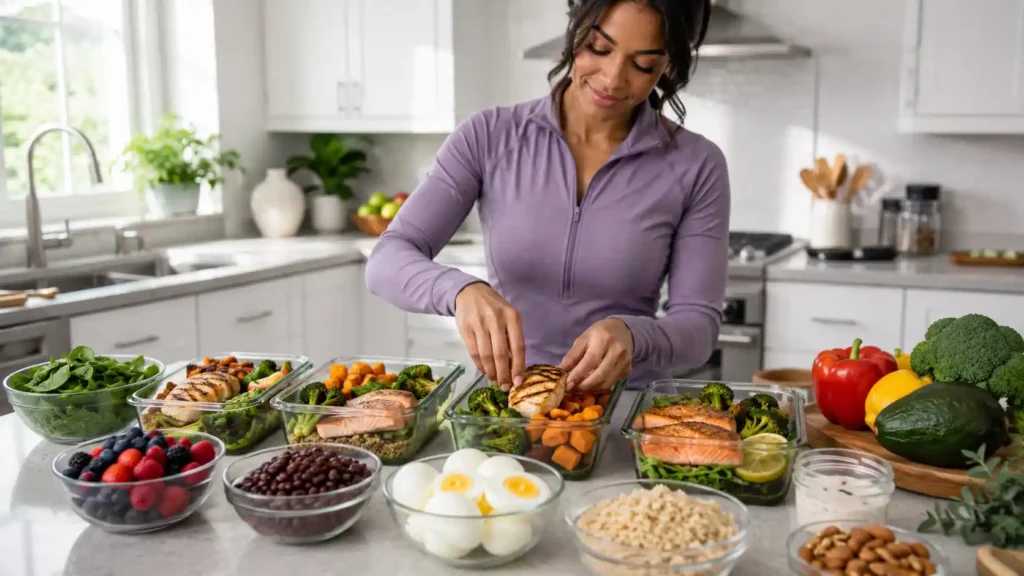
Cook several portions at once
Prepare a few servings of:
- Chicken
- Brown rice
- Roasted vegetables
- Lentils
- Hard-boiled eggs
Then combine them differently throughout the week.
Keep convenient healthy foods available
Frozen vegetables, canned beans, canned tuna, plain yogurt, eggs, and fruit can make healthy meals easier when you’re short on time.
Don’t make the plan unnecessarily restrictive
If you dislike a particular food, replace it.
For example:
Salmon → cod or chicken
Greek yogurt → cottage cheese or fortified soy yogurt
Brown rice → quinoa or potatoes
Chicken → tofu or beans
Flexibility makes a plan easier to maintain.
Can You Eat Carbs and Still Lose Weight?
Yes.
You don’t have to eliminate bread, rice, potatoes, oats, fruit, or other carbohydrate-containing foods to lose weight.
Instead, pay attention to:
- Portion size
- Food quality
- Added sugars
- Fiber
- Overall calorie intake
- How the food fits into your complete meal
CDC guidance recommends a varied eating pattern rather than eliminating individual food groups.
Do You Need to Count Calories?
Not necessarily.
Some people find calorie tracking useful, while others prefer portion awareness and structured meals.
The important consideration is whether your eating pattern provides appropriate nutrition while supporting the calorie balance needed for your goal.
The CDC notes that you don’t necessarily need to count calories all the time, although understanding your calorie needs can be helpful.
If you want to estimate your individual needs, a registered dietitian or qualified healthcare professional can help account for your circumstances.
How Fast Should You Lose Weight?
Avoid meal plans promising dramatic results in a few days.
The CDC says people who lose weight gradually—about 1 to 2 pounds per week—are more likely to keep it off than people who lose weight more quickly.
Your actual rate may be different.
Weight changes can be affected by:
- Starting weight
- Food intake
- Activity
- Medications
- Medical conditions
- Hormones
- Sleep
- Stress
- Age
NIDDK recommends realistic goals rather than programs promising extreme results.
Common Mistakes With Weight-Loss Meal Plans
Eating too little
Severely restricting food can make a plan difficult to maintain and may make it harder to meet nutritional needs.
Focusing only on calories
Calories matter, but nutritional quality matters too.
A healthy meal plan should provide adequate protein, fiber, vitamins, minerals, and other nutrients.
Eliminating entire food groups
You generally don’t need to eliminate carbohydrates, dairy, grains, or another food group unless there is a specific medical or dietary reason.
Drinking calories without noticing
Sugary drinks and high-calorie coffee beverages can add substantial calories without providing the same fullness as a meal.
Making every meal “perfect”
One restaurant meal or dessert doesn’t ruin an otherwise healthy eating pattern.
A sustainable plan allows flexibility.
Can You Have Dessert and Still Lose Weight?
Yes.
A weight-loss meal plan doesn’t need to ban every food you enjoy.
You can occasionally include:
- A small piece of dark chocolate
- Fruit with yogurt
- A small serving of ice cream
- A homemade dessert
The key is how the food fits into your overall eating pattern and calorie needs.
Mayo Clinic recommends choosing a varied plan that you can live with long term rather than one that is excessively restrictive.
How to Adjust This Meal Plan to Your Needs
This sample menu is intentionally flexible.
If you’re vegetarian
Replace:
- Chicken → tofu, tempeh, beans, or lentils
- Fish → tofu, tempeh, or legumes
- Turkey → beans or soy-based protein
If you’re vegan
Use:
- Tofu
- Tempeh
- Lentils
- Beans
- Chickpeas
- Edamame
- Fortified soy milk
- Other appropriately fortified plant foods
If you’re gluten-free
Choose naturally gluten-free foods such as:
- Rice
- Potatoes
- Quinoa
- Beans
- Lentils
- Fruits
- Vegetables
- Eggs
- Meat
- Fish
Check packaged products carefully for gluten-containing ingredients.
If you’re on a tight budget
Prioritize:
- Eggs
- Beans
- Lentils
- Oats
- Potatoes
- Frozen vegetables
- Seasonal fruit
- Canned tuna
- Brown rice
Healthy eating doesn’t require expensive specialty foods.
A healthy meal plan for weight loss should be balanced, realistic, and flexible—not a crash diet.
A practical weekly pattern can include:
- Protein at meals
- Plenty of vegetables
- Whole fruits
- Whole grains and other nutrient-dense carbohydrates
- Healthy fats in appropriate portions
- Water and other low-calorie beverages
- Occasional foods you enjoy
The goal isn’t to find a perfect seven-day menu. It’s to develop an eating pattern you can continue for months and years.
The CDC emphasizes that healthy weight management involves healthy eating, physical activity, adequate sleep, and stress management, while NIDDK recommends realistic, sustainable weight-loss strategies rather than extreme programs.
Frequently Asked Questions
What is the best meal plan for weight loss?
There is no single best meal plan for everyone. A good plan provides balanced nutrition, an appropriate amount of calories, foods you enjoy, and enough flexibility to follow it long term.
What should I eat for breakfast to lose weight?
Good options include eggs with vegetables and whole-grain toast, plain Greek yogurt with berries and oats, or oatmeal combined with yogurt and fruit.
What should I eat for lunch when trying to lose weight?
Try a meal containing lean protein, vegetables, and a high-fiber carbohydrate, such as a chicken salad with beans and whole grains or a turkey vegetable wrap with fruit.
What should I eat for dinner to lose weight?
A simple formula is protein + vegetables + a nutrient-dense carbohydrate. Examples include salmon with broccoli and sweet potato or chicken with vegetables and brown rice.
Can I eat rice while trying to lose weight?
Yes. Rice can fit into a weight-loss eating pattern. Portion size and the overall meal matter more than eliminating rice completely.
Can I eat bread on a weight-loss meal plan?
Yes. Whole-grain bread can be part of a balanced meal. Look at serving size, fiber, and the overall nutritional profile.
Are snacks necessary for weight loss?
No. Some people prefer three meals without snacks, while others find planned snacks helpful. Choose the approach that works with your hunger, schedule, and overall calorie needs.
Can I lose weight without counting calories?
Possibly. Some people successfully manage their weight using portion awareness, food choices, meal planning, and other habits without tracking every calorie. However, calorie needs still matter physiologically.
How much weight can I lose in a week?
The CDC describes gradual weight loss of about 1 to 2 pounds per week as a pace associated with better weight-loss maintenance than faster loss, although individual results vary.
Is meal prep good for weight loss?
Meal preparation can make healthy choices easier by reducing last-minute decisions and making balanced food available when you’re hungry.
Can I eat dessert while trying to lose weight?
Yes. An occasional modest serving can fit into an overall healthy eating pattern, provided it fits your nutritional and calorie needs.
Is a high-protein meal plan better for weight loss?
Higher-protein eating patterns can be useful for some people, but there is no requirement for everyone to follow a high-protein diet. Protein should be part of a balanced eating pattern.
Friendly Summary
A healthy meal plan for weight loss should emphasize nutrient-dense foods while providing an appropriate amount of calories for the individual’s needs. A practical plan can include lean protein, vegetables, fruits, whole grains, beans and lentils, healthy fats, and low-calorie beverages. Weight loss generally requires an overall energy deficit, but an effective plan should also be nutritionally adequate and sustainable. The CDC recommends healthy eating patterns, regular physical activity, adequate sleep, and stress management for healthy weight management.
Medical Disclaimer
This article is for general educational purposes and is not individualized medical or nutrition advice. People with diabetes, kidney disease, heart disease, gastrointestinal conditions, eating disorders, pregnancy, or other medical concerns may need a different eating plan. Speak with a healthcare professional or registered dietitian before making major dietary changes if you have a medical condition or special nutritional needs.
Also Read More –How Many Calories Should I Eat to Lose Weight?