
Learn how to lose weight naturally with evidence-based strategies for healthy eating, physical activity, sleep, stress, and sustainable habits.
Medical disclaimer: This article provides general educational information about healthy weight management and is not individualized medical advice. Weight-loss needs vary by health status, medications, age, nutritional needs, and other factors. Talk with a qualified healthcare professional before making major changes to your diet or exercise routine, particularly if you have a medical condition, are pregnant or breastfeeding, have a history of an eating disorder, or take medications that may affect your weight.
What does it really mean to lose weight naturally?
If you want to lose weight without relying on weight-loss drugs, surgery, or questionable supplements, the most reliable approach is surprisingly straightforward: build eating and activity habits that you can maintain over time.
Natural weight loss doesn’t require a detox tea, fat burner, miracle food, or extreme diet. For most adults, it means improving food choices and portions, increasing physical activity, getting adequate sleep, managing stress, and creating habits that support a sustainable reduction in calorie intake.
The CDC describes healthy weight loss as a lifestyle that includes healthy eating, regular physical activity, enough sleep, and stress management. It also notes that people who lose weight gradually—about 1 to 2 pounds per week—are more likely to keep it off than people who lose weight faster.
Just as importantly, you don’t have to overhaul your entire life overnight.
A better strategy is to identify the changes that matter most, start with a few of them, and build from there.
8 evidence-based ways to lose weight naturally
1. Build your meals around nutrient-dense foods
One of the easiest ways to improve your diet is to focus less on individual “fat-burning” foods and more on the overall quality of your meals.
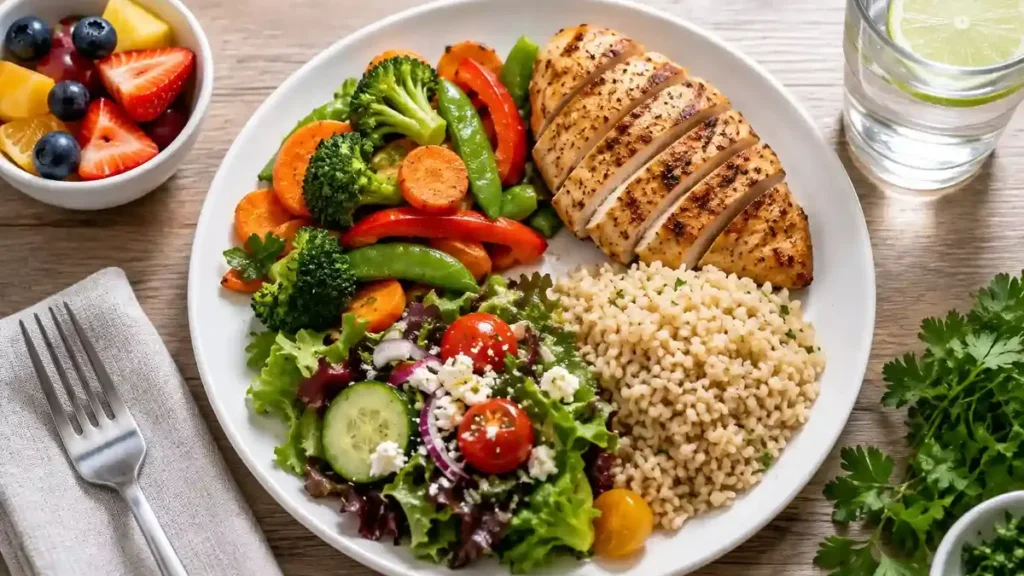
The current Dietary Guidelines for Americans 2025–2030 encourage diets built around whole, nutrient-dense foods, including protein, dairy, vegetables, fruits, healthy fats, and whole grains. They also recommend reducing highly processed foods and foods high in refined carbohydrates, added sugars, excess sodium, and unhealthy fats.
A practical meal might include:
- A protein source such as eggs, chicken, fish, beans, lentils, Greek yogurt, or tofu
- Plenty of vegetables
- A serving of fruit
- Whole grains or another minimally processed carbohydrate
- A source of healthy fat such as nuts, seeds, or avocado
You don’t need every meal to be perfect. The goal is to make nutritious choices easier and more consistent.
A simple plate strategy
Instead of obsessing over exact measurements, try making vegetables or other high-fiber foods a substantial part of your meal, include a satisfying protein source, and choose an appropriate portion of carbohydrate and fat.
Portion awareness matters because even nutritious foods can contribute more calories than you need when eaten in very large quantities. NIDDK specifically recommends keeping food and beverage portions in check as part of healthy weight management.
2. Create a manageable calorie deficit
You don’t have to eat tiny portions or follow a rigid diet to lose weight.
But weight loss generally requires your body to use more energy than it gets from food and beverages over time. In practice, that means finding a way to reduce overall calorie intake without making your diet so restrictive that you can’t maintain it.
You can create that deficit by:
- Eating smaller portions
- Choosing more filling foods
- Reducing sugary drinks
- Limiting frequent high-calorie snacks
- Cooking more meals at home
- Increasing physical activity
- Combining several small changes
You also don’t necessarily need to count calories.
Some people find calorie tracking useful, while others prefer portion control and consistent meal patterns. The best approach is the one you can use accurately without becoming unnecessarily restrictive.
NIDDK says successful weight-loss programs generally include a healthy eating plan that provides fewer calories while still meeting nutritional needs, along with physical activity and behavioral support.
3. Prioritize protein and fiber
Protein and fiber can make meals more satisfying, which may make it easier to maintain a lower-calorie eating pattern.
Good protein choices include:
- Fish
- Chicken and other lean meats
- Eggs
- Greek yogurt
- Cottage cheese
- Beans
- Lentils
- Tofu
- Tempeh
Fiber-rich choices include:
- Vegetables
- Fruits
- Beans and lentils
- Whole grains
- Nuts and seeds
Rather than searching for a single “best” weight-loss food, build meals that combine protein, fiber, and minimally processed foods.
For example:
Breakfast: Greek yogurt + berries + nuts
Lunch: Chicken or beans + vegetables + whole grain
Dinner: Fish or tofu + roasted vegetables + potatoes or brown rice
This type of structure is generally more useful than trying to eliminate an entire food group without a good reason.
4. Cut back on sugary drinks and easy-to-overlook calories
Beverages can make it surprisingly easy to consume calories without feeling as though you’ve eaten much.
Depending on what you currently drink, replacing some:
- Regular soda
- Sweetened coffee drinks
- Energy drinks
- Sweet tea
- Fruit-flavored drinks
with water or unsweetened beverages can be a relatively simple change.
You don’t have to eliminate every enjoyable drink. The point is to identify calories that provide little fullness and decide whether they are worth keeping in your routine.
The current federal Dietary Guidelines emphasize reducing added sugars and highly processed foods as part of a healthier dietary pattern.
5. Move more throughout the day
Exercise doesn’t have to mean spending an hour in a gym.
Walking, taking the stairs, doing household chores, gardening, cycling, swimming, dancing, and other forms of movement all contribute to your activity level.

If you’re currently inactive, start with something manageable.
For example:
- Walk for 10–15 minutes after dinner.
- Take short movement breaks during work.
- Park farther away when practical.
- Take the stairs when appropriate.
- Walk while talking on the phone.
- Gradually increase your daily activity.
The CDC recommends that adults get at least 150 minutes of moderate-intensity aerobic activity per week, along with muscle-strengthening activity on at least 2 days per week. Those are general physical-activity recommendations, not a guarantee of a particular amount of weight loss.
NIDDK also notes that physical activity has important health benefits even when its direct effect on scale weight is modest, and it may help with maintaining weight loss.
6. Add strength training
If you’re trying to lose weight, don’t think only about the number on the scale.
Strength training can help you maintain or build muscle while improving strength and physical function.
You don’t necessarily need expensive equipment.
Depending on your fitness level, a beginner routine might include:
- Squats or chair squats
- Wall or modified push-ups
- Resistance-band rows
- Hip hinges
- Step-ups
- Light dumbbell exercises
Start at an appropriate level and increase gradually.
If you have an injury, significant medical condition, or haven’t exercised for a long time, ask a healthcare professional about an appropriate activity plan.
7. Get enough sleep
Sleep isn’t a magic weight-loss treatment, but consistently getting too little sleep can make healthy habits harder to maintain.

The CDC recommends that adults get 7 or more hours of sleep per night.
Better sleep habits can include:
- Keeping a consistent sleep and wake schedule
- Giving yourself enough time in bed
- Limiting caffeine later in the day if it disrupts sleep
- Turning off electronic devices before bedtime
- Keeping your bedroom dark, quiet, and comfortable
Don’t think of sleep as something that “burns fat.”
Instead, treat it as one part of the lifestyle that supports healthy eating, activity, recovery, and overall well-being.
8. Manage stress and make your habits repeatable
Stress doesn’t automatically cause weight gain, and stress management isn’t a standalone weight-loss treatment.
But stress can affect eating patterns, sleep, activity, and your ability to stick with a plan.
The CDC recommends strategies such as taking time to unwind, deep breathing, journaling, spending time outdoors, and connecting with people you trust.
More importantly, make your weight-loss plan realistic.
Instead of:
“I’m going to completely change my diet starting Monday.”
Try:
“I’m going to replace one sugary drink each day and walk for 15 minutes after dinner three times this week.”
Specific, achievable goals are easier to repeat. The CDC recommends setting realistic short-term goals and adjusting your plan when setbacks occur.
What should you eat to lose weight naturally?
There isn’t one magical weight-loss food.
A healthier approach is to build your overall eating pattern around nutrient-dense foods.
Foods to emphasize
| Food group | Examples |
|---|---|
| Protein | Fish, eggs, chicken, beans, lentils, tofu, Greek yogurt |
| Vegetables | Leafy greens, broccoli, peppers, carrots, tomatoes |
| Fruit | Berries, apples, oranges, bananas, melon |
| Whole grains | Oats, brown rice, quinoa, whole-grain bread |
| Healthy fats | Nuts, seeds, avocado, olive oil |
| Dairy or alternatives | Yogurt, milk, fortified alternatives |
The current Dietary Guidelines for Americans 2025–2030 emphasize whole, nutrient-dense foods and recommend reducing highly processed foods, added sugars, refined carbohydrates, excess sodium, and unhealthy fats.
What about carbs?
You don’t necessarily need to eliminate carbohydrates.
Foods such as fruit, beans, potatoes, and whole grains can fit into a weight-management diet. What matters is the overall eating pattern, portions, nutritional quality, and whether the approach helps you maintain an appropriate calorie intake.
What about fat?
The same principle applies.
Healthy fats are nutritious but calorie-dense, so portions still matter.
Do you have to count calories to lose weight?
No.
Calorie balance still matters, but you don’t have to manually count every calorie.
Some people prefer tracking because it gives them precise feedback. Others do better by:
- Using consistent portions
- Eating mostly minimally processed foods
- Prioritizing protein and fiber
- Drinking fewer calorie-containing beverages
- Planning meals
- Paying attention to hunger and fullness
- Keeping high-calorie snack foods less accessible
If your weight isn’t changing after several weeks, tracking food temporarily can sometimes reveal portions, drinks, snacks, or other sources of calories that are easy to underestimate.
Tracking should be a tool—not a requirement or a source of guilt.
Can you lose weight naturally without exercise?
Yes.
Dietary changes can reduce calorie intake enough to produce weight loss even without formal exercise.
However, physical activity remains important for cardiovascular health, strength, fitness, mental well-being, and helping maintain weight loss. NIDDK specifically notes that physical activity may not have a large effect on weight loss by itself but has important health benefits and may help prevent weight regain.
If you dislike traditional workouts, start with walking or another activity you enjoy.
You don’t need to become a marathon runner to become more active.
How fast can you lose weight naturally?
There is no single rate that applies to everyone.
The CDC describes about 1–2 pounds per week as a gradual pace associated with better long-term weight maintenance compared with faster loss.
Your actual rate may vary because of:
- Starting body weight
- Food intake
- Activity level
- Age
- Medications
- Medical conditions
- Sleep
- Hormonal factors
- Water-weight changes
- Adherence to your plan
NIDDK says an initial goal of 5%–10% of starting weight over about 6 months can be a realistic goal for many adults who need to lose weight.
For example, at a starting weight of 200 pounds, 5% is 10 pounds.
That may sound modest compared with aggressive online weight-loss promises, but even modest weight loss can provide meaningful health benefits for people who have overweight or obesity.
Do natural weight-loss supplements work?
Be careful with this category.
“Natural” does not mean proven, safe, or effective.
The NIH Office of Dietary Supplements says the proven approaches to weight loss are healthy eating, reducing calorie intake, and physical activity. It also notes that there is little scientific evidence that weight-loss supplements work, and some can interact with medications or cause harm.
That includes products marketed as:
- Fat burners
- Metabolism boosters
- Detox teas
- Appetite suppressants
- Herbal weight-loss formulas
- “Natural Ozempic” alternatives
A supplement should not replace evidence-based lifestyle changes.
If you’re considering a weight-loss supplement, talk with a healthcare professional first—especially if you take medications or have a medical condition.
Is intermittent fasting a natural way to lose weight?
Intermittent fasting can be a useful eating pattern for some adults, but it isn’t a requirement for natural weight loss.
The important question is whether the eating schedule helps you maintain a nutritionally adequate diet and an appropriate calorie intake without causing problems such as excessive hunger, binge eating, or difficulty meeting nutritional needs.
You don’t need to fast to lose weight.
People who prefer regular meals can lose weight too.
If you have diabetes, take medications that can cause low blood sugar, are pregnant or breastfeeding, or have a history of an eating disorder, discuss fasting with a healthcare professional before trying it.
Why am I not losing weight even though I’m eating healthy?
This is one of the most frustrating parts of weight loss.
“Healthy” food and weight loss aren’t exactly the same thing.
A diet can contain nutritious foods while still providing enough calories to maintain your current weight.
Other possibilities include:
Portions are larger than expected
Foods such as nuts, oils, cheese, restaurant meals, and calorie-dense snacks can add substantial calories in relatively small amounts.
Liquid calories are adding up
Sweetened beverages, specialty coffees, smoothies, and alcohol can contribute calories without providing as much fullness as solid food.
Activity has decreased
You may be exercising but moving less during the rest of the day.
Your expectations are too aggressive
Weight loss isn’t perfectly linear. Water retention can temporarily hide changes in body fat.
Your medications or health conditions matter
NIDDK notes that medicines, medical conditions, stress, genes, hormones, environment, and age can all affect weight management.
If you’ve made sustained changes and are concerned about your weight or suspect a medication or health condition may be affecting it, talk with your healthcare professional.
A simple 7-day natural weight-loss starter plan
Don’t treat this as a crash diet.
Use it as a way to establish a few repeatable habits.
Day 1: Replace one sugary drink
Choose water or an unsweetened beverage instead.
Day 2: Add vegetables to two meals
Don’t worry about creating a perfect diet. Simply increase the amount of nutrient-dense food on your plate.
Day 3: Take a 15–30 minute walk
Choose a pace and duration appropriate for your current fitness level.
Day 4: Add a protein source to each main meal
Try eggs, yogurt, fish, poultry, beans, lentils, tofu, or another protein-rich food.
Day 5: Do a beginner strength workout
Use body weight, resistance bands, or light weights if appropriate.
Day 6: Review your portions and beverages
Look for the easiest sources of excess calories rather than eliminating everything you enjoy.
Day 7: Review your week
Ask:
- Which habit was easiest?
- Which was hardest?
- What can I realistically continue?
- What is one additional habit I can add next week?
The goal isn’t to “finish” the seven days.
The goal is to create a routine you can repeat.
How to keep the weight off after losing it
Weight loss and weight maintenance are different challenges.
A common mistake is treating the end of a diet as permission to return immediately to the eating and activity habits that contributed to weight gain.
Instead:
- Keep the habits that helped you lose weight.
- Continue regular physical activity.
- Monitor your progress in a way that doesn’t become obsessive.
- Plan for weekends, vacations, and social events.
- Expect occasional setbacks.
- Return to your normal routine after an off-plan meal rather than giving up.
NIDDK recommends having a specific maintenance plan and notes that continued lifestyle habits, physical activity, monitoring, and ongoing support can help prevent regain.
Behavior-based weight-management programs also have evidence supporting their usefulness for weight loss and reducing regain, particularly when they include multiple components such as dietary changes, physical activity, self-monitoring, problem-solving, and support.
When should you talk with a healthcare professional?
You don’t need a doctor’s permission to eat more vegetables or take a walk, but professional guidance can be important when weight management is complicated by health conditions or medications.
Consider speaking with a healthcare professional if:
- You have obesity or significant overweight and want structured support.
- You have diabetes or prediabetes.
- You have high blood pressure or cardiovascular disease.
- A medication may be affecting your weight.
- You experience unexplained weight gain or loss.
- You have significant limitations that make exercise difficult.
- You’re pregnant or breastfeeding.
- You have a current or past eating disorder.
- You’re considering prolonged fasting or a highly restrictive diet.
NIDDK notes that healthcare professionals can review medical conditions and medications, help establish appropriate goals, and refer patients to specialists such as registered dietitians or weight-management programs when appropriate.
For adults with obesity, the U.S. Preventive Services Task Force recommends offering or referring patients to intensive, multicomponent behavioral interventions.
Frequently Asked Questions
1. What is the best way to lose weight naturally?
The most reliable approach is to combine a sustainable eating pattern with an appropriate calorie deficit, regular physical activity, adequate sleep, and habits you can maintain over time. There is no single food, drink, or supplement that replaces these fundamentals.
2. How much weight can you safely lose in a week?
The CDC describes about 1–2 pounds per week as a gradual pace that is more likely to be maintained than faster weight loss. Individual results vary.
3. Can I lose weight without exercising?
Yes. Reducing calorie intake can result in weight loss without formal exercise. However, physical activity has important health benefits and can help with weight maintenance.
4. Do I have to count calories?
No. Calorie intake still matters, but you can use portion control, food choices, meal planning, and other habits instead of counting every calorie.
5. What foods are best for natural weight loss?
Prioritize nutrient-dense foods such as vegetables, fruits, whole grains, protein-rich foods, beans, and healthy fats. The current Dietary Guidelines for Americans emphasize whole, nutrient-dense foods rather than relying on individual “fat-burning” foods.
6. Does drinking water help you lose weight?
Water can be a useful replacement for calorie-containing beverages, but simply drinking large amounts of water isn’t a standalone weight-loss treatment. Don’t force excessive water intake.
7. Can walking help you lose weight?
Yes. Walking increases physical activity and can contribute to weight management. It can also be an accessible starting point for people who are currently inactive.
8. How much exercise should I get?
The CDC recommends adults get at least 150 minutes of moderate-intensity aerobic activity each week plus muscle-strengthening activity on at least two days per week. You can build toward these amounts gradually.
9. Does sleep affect weight loss?
Sleep is part of healthy weight management, although it isn’t a standalone weight-loss treatment. Most adults should get at least seven hours of sleep each night.
10. Do natural fat burners work?
Evidence for weight-loss supplements is generally limited. NIH’s Office of Dietary Supplements says there is little scientific evidence that weight-loss supplements work, and some can interact with medications or cause harm.
11. Why am I not losing weight when I eat healthy?
Healthy food choices are important, but total intake, portions, activity, sleep, medications, medical conditions, genetics, hormones, and other factors can influence weight.
12. How can I prevent weight regain?
Keep the eating and activity habits that supported your weight loss, monitor your progress in a sustainable way, plan for setbacks, and seek ongoing support when needed. NIDDK specifically recommends a maintenance plan rather than treating weight loss as a short-term project.
13. Is intermittent fasting necessary for weight loss?
No. Some people may find it useful, but you can lose weight using regular meals and other eating patterns. The best approach is one that meets your nutritional needs and can be maintained safely.
14. When should I talk to a doctor about losing weight?
Talk with a healthcare professional if you have obesity, a relevant medical condition, take medications that may affect weight, have unexplained weight changes, or are considering a restrictive diet or fasting approach.
Summary
How to lose weight naturally: Focus on sustainable lifestyle changes rather than detoxes or weight-loss supplements. A practical approach includes eating mostly nutrient-dense foods, managing portions and overall calorie intake, prioritizing protein and fiber, reducing sugary drinks and highly processed foods, increasing daily movement, performing aerobic and strength exercise, getting adequate sleep, and managing stress. Gradual weight loss is generally more sustainable than rapid loss. The CDC describes about 1–2 pounds per week as a gradual pace for many adults, while NIDDK notes that an initial goal of 5%–10% of starting weight over about six months can be realistic for people who need to lose weight.
Key Takeaway
You don’t need a miracle diet to lose weight naturally.
Start with the fundamentals:
- Eat mostly nutrient-dense foods.
- Pay attention to portions and overall calorie intake.
- Get enough protein and fiber.
- Reduce sugary drinks and highly processed foods.
- Move more throughout the day.
- Include aerobic and strength exercise.
- Aim for adequate sleep.
- Build habits you can continue after the scale starts moving.
The best weight-loss plan isn’t necessarily the fastest one. It’s the one that improves your health without requiring you to live in a way you can’t sustain.
Also Read –Why Am I Not Losing Weight? 15 Reasons Your Weight Loss Has Stopped (And What To Do)
Affiliate Disclosure
Affiliate Disclosure: HealthFit may earn a commission if you purchase a product through an affiliate link on this website. This does not increase your purchase price. We only recommend products or services that are relevant to the topic and appropriate for our editorial standards.