
Weight loss after 40 works differently due to real muscle and hormone changes. Here’s what actually causes it, and what genuinely helps.

If you’re working on weight loss after 40, you may feel frustrated when the same habits that once helped you manage your weight no longer seem to produce the same results. You may be eating more carefully, exercising regularly, and still wondering why progress feels slow.
Getting older does not make healthy weight management impossible. This guide walks through what genuinely changes with weight loss after 40, based on research from the National Institutes of Health and other U.S. health authorities, and what approaches actually help.
Quick Answer: Weight loss after 40 is harder mainly because of a real decline in muscle mass, which lowers resting metabolic rate, combined with hormonal shifts, including perimenopause in women and gradually declining testosterone in men, that further affect body composition. Appetite and food intake don’t automatically adjust to match a slower metabolism, which is why the same habits that worked before can stop producing the same results. The most effective response tends to be prioritizing muscle-preserving strength training, adequate protein, and recalculating calorie needs, rather than simply eating less or doing more cardio.
Why Weight Loss Actually Changes After 40
According to NIH research on aging and metabolism, metabolism genuinely slows as people get older, the body burns fewer calories, breaks down food differently, and loses lean muscle over time. NIH aging expert Dr. Rafael de Cabo notes that while metabolism tends to slow with age, appetite and food intake typically don’t decrease to match it, which creates a steady calorie surplus if nothing else changes. This pattern, sometimes called “middle-age spread,” is described by NIH as a natural consequence of aging rather than a sign that something has gone wrong.
At the same time, fat distribution shifts. With age, people tend to carry less fat under the skin and more around their internal organs, a shift toward visceral fat that carries greater health risk than fat stored elsewhere on the body.
Muscle Loss Is a Bigger Factor Than Most People Realize
Muscle tissue is metabolically active, meaning it burns calories even at rest, so losing it directly lowers daily calorie needs. Research on the metabolic consequences of weight loss indicates that adults lose roughly 3 to 5 percent of their muscle mass per decade starting around age 30, and this can accelerate further without intervention.
This matters because a calorie target that worked in your 30s may no longer create the same deficit in your 40s, simply because body composition has changed, independent of anything being done wrong.
Hormonal Shifts Add Another Layer
For women, perimenopause is a significant contributor to weight loss difficulty in this age range. Research indicates that hormonal changes during perimenopause can reduce basal metabolic rate by roughly 250 to 300 calories per day, which, left unaddressed, may lead to noticeable weight gain over the course of a year even without a change in habits. This same hormonal shift is associated with an increase in abdominal fat specifically, alongside an accelerated loss of lean muscle mass beyond what’s typically seen with aging alone.
For men, gradually declining testosterone levels over time can also affect body composition, contributing to increased fat storage and reduced muscle mass, though this shift tends to be more gradual than the perimenopausal transition in women.
What Actually Helps With Weight Loss After 40
Prioritize Resistance Training, Not Just Cardio
Since muscle loss is one of the biggest drivers of a slower metabolism after 40, building and preserving muscle through resistance training becomes especially valuable. This doesn’t require lifting extremely heavy weights right away, but it does mean progressively challenging your muscles over time, rather than relying on cardio alone.
Pay Closer Attention to Protein Intake
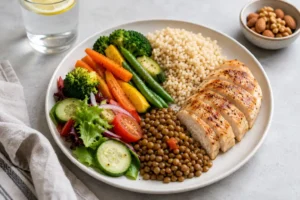
Adequate protein intake may support muscle preservation, particularly during calorie restriction, since weight loss naturally comes with some loss of lean mass alongside fat. Spreading protein across meals, rather than concentrating it in one meal, tends to be more effective for muscle maintenance. A registered dietitian can help determine an appropriate protein target for your individual situation.
Recalculate Your Calorie Needs Periodically
Because muscle mass and hormone levels shift over time, a calorie target that worked previously may no longer apply. NIDDK offers a free online Body Weight Planner that estimates updated calorie needs based on your current weight, age, and activity level.
Meet Physical Activity Guidelines Consistently
The CDC recommends that adults get at least 150 minutes of moderate-intensity activity per week, along with muscle-strengthening activity on two or more days. This combination, rather than cardio alone, addresses both the calorie balance side and the muscle-preservation side of weight management after 40.
Don’t Overlook Sleep
Poor sleep is associated with disrupted hunger-regulating hormones, and for women navigating perimenopause specifically, hot flashes and night sweats have been linked in research to disrupted sleep and subsequent weight gain over time. Improving sleep consistency is a genuinely useful, often underestimated lever.
Common Mistakes People Make Trying to Lose Weight After 40
A common mistake is applying the same approach that worked in your 20s or 30s, particularly relying heavily on cardio while skipping strength training, since this doesn’t address the muscle loss that’s driving much of the metabolic slowdown. Another common mistake is cutting calories aggressively without adequate protein, which may accelerate muscle loss rather than preserve it. A third mistake is assuming a stalled scale means something is fundamentally wrong, rather than recognizing that hormonal and muscle-related changes genuinely shift how much progress to expect and how quickly.
Conclusion
Weight loss after 40 is genuinely different from weight loss at 25, and that’s backed by real physiology, not just perception. Muscle loss, metabolic changes, and hormonal shifts all play a measurable role, which means the habits that worked before may need real adjustment, not just more effort. The good news is that the specific levers that matter most, strength training, protein, activity, sleep, and recalculated calorie needs, are all within reach and well supported by research. Start with one adjustment rather than all five at once, give it a genuine few weeks, and build from there.
Frequently Asked Questions
Why is it harder to lose weight after 40 than it was before?
This is primarily due to a genuine slowdown in metabolism combined with ongoing muscle loss, while appetite typically doesn’t decrease to match the lower calorie burn, creating a natural tendency toward weight gain unless habits are adjusted.
Does menopause really cause weight gain?
Research indicates that perimenopause is associated with a measurable drop in basal metabolic rate, of roughly 250 to 300 calories per day, along with a shift toward increased abdominal fat, both of which may contribute to weight gain if lifestyle habits stay the same.
Is cardio or strength training better for weight loss after 40?
Both have a role, but strength training becomes especially important after 40 because it directly addresses muscle loss, which is one of the biggest drivers of a slower metabolism at this age.
How much protein do I need after 40 to support weight loss?
Specific needs vary by individual. A healthcare provider or registered dietitian can help determine an appropriate target for your situation rather than following a generic number.
Can I still lose weight after 40 without hormone therapy?
Yes. While hormonal shifts do make weight management more challenging for many people, lifestyle factors including resistance training, protein intake, physical activity, and sleep all have a meaningful, well-documented impact independent of hormone therapy.
Why does the scale seem stuck even though I’m eating less?
If muscle mass has decreased, calorie needs have likely decreased too, meaning a calorie target that worked previously may no longer create a deficit. Recalculating your needs periodically can help identify this.
Is weight gain after 40 inevitable?
NIH describes “middle-age spread” as a common, natural tendency with age, but notes it isn’t inevitable — consistent adjustments to activity, strength training, and diet can meaningfully offset these age-related changes.
Does testosterone decline affect men’s weight loss after 40?
Yes, gradually declining testosterone over time is associated with changes in body composition, including increased fat storage and reduced muscle mass, though this typically happens more gradually than hormonal shifts in perimenopausal women.
How does sleep affect weight loss after 40?
Poor sleep is associated with disrupted hunger-regulating hormones, and for women in particular, menopause-related sleep disruptions like hot flashes have been linked in research to subsequent weight gain over time.
Should I eat significantly fewer calories after 40?
Not necessarily as a first step. It’s often more effective to first address muscle preservation through strength training and protein intake, and to recalculate actual calorie needs, rather than assuming a large calorie cut is required.
This article is for informational purposes only and is not intended as medical advice. Always consult a qualified healthcare provider before starting any new supplement, diet, or exercise program, especially if you have an existing health condition or are taking medication.